
Rose Garden Wedding Venues: Choosing a Bloom-Ready Setting
Rose garden wedding venues give you a naturally colorful ceremony backdrop, with fragrant blooms and landscaped paths built into the setting. As you compare garden wedding venues, look for a place whose bloom season, guest capacity, and event rules fit the celebration you have in mind.
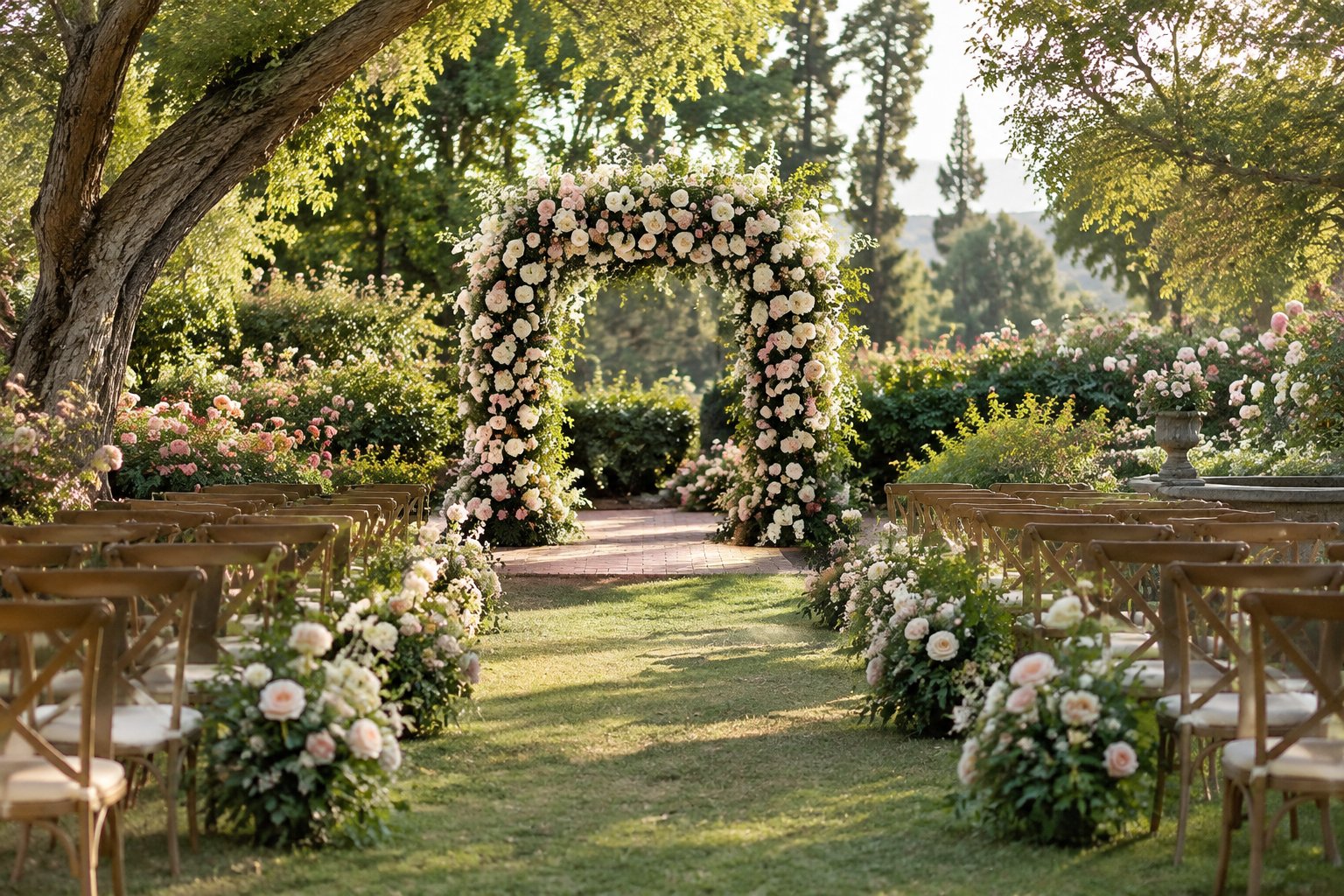
Your date can shape the look of the garden as much as your décor. Start a shortlist, then ask each venue when its roses are at their best and what spaces you can use if the weather changes.
Why Choose a Garden Setting for Your Wedding?
A garden setting gives your wedding ceremony a natural backdrop of flowers, greenery, and open sky. Rose beds add color and fragrance, while paths and hedges help define the space for an outdoor wedding venue.
What Makes Roses a Memorable Ceremony Backdrop?
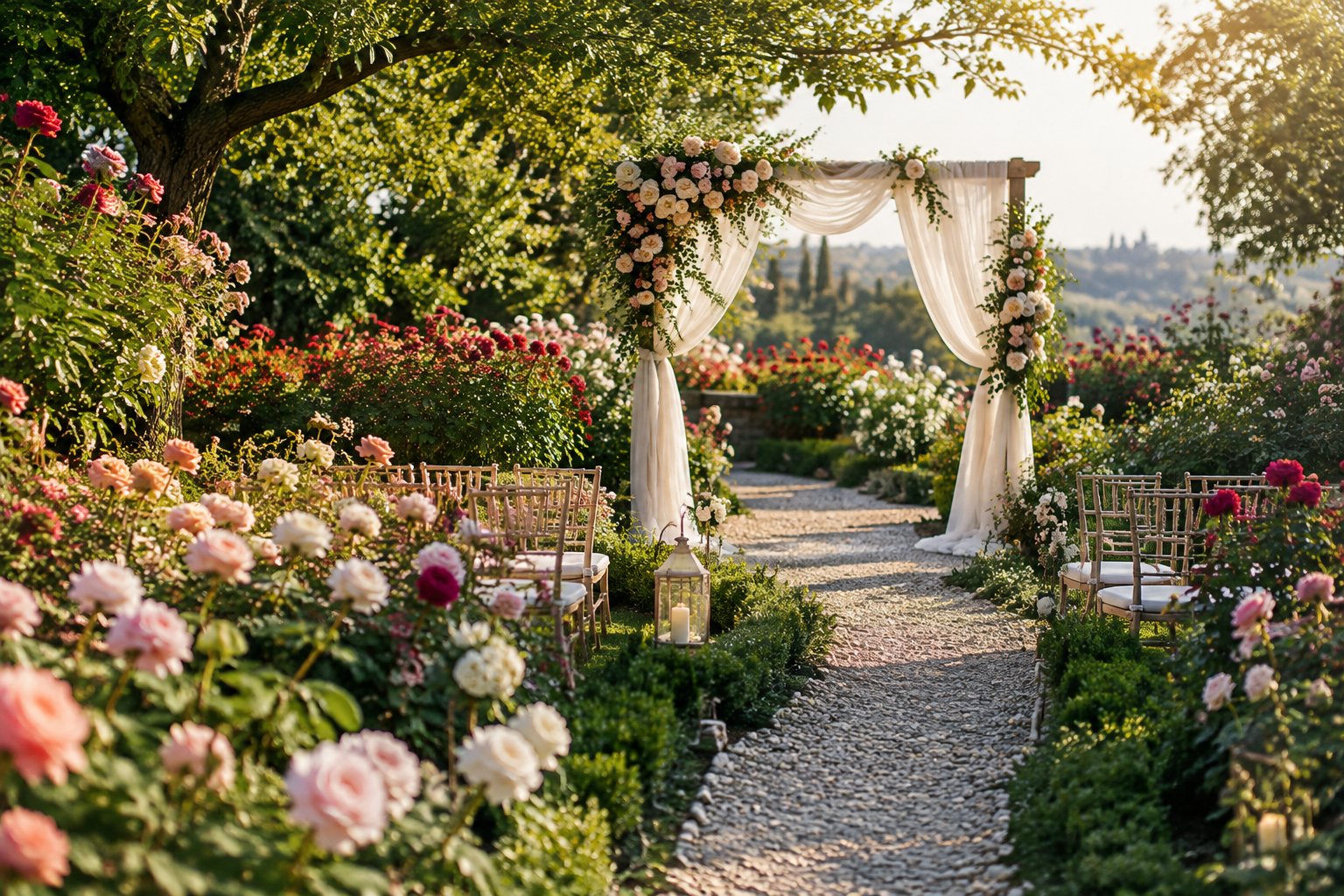
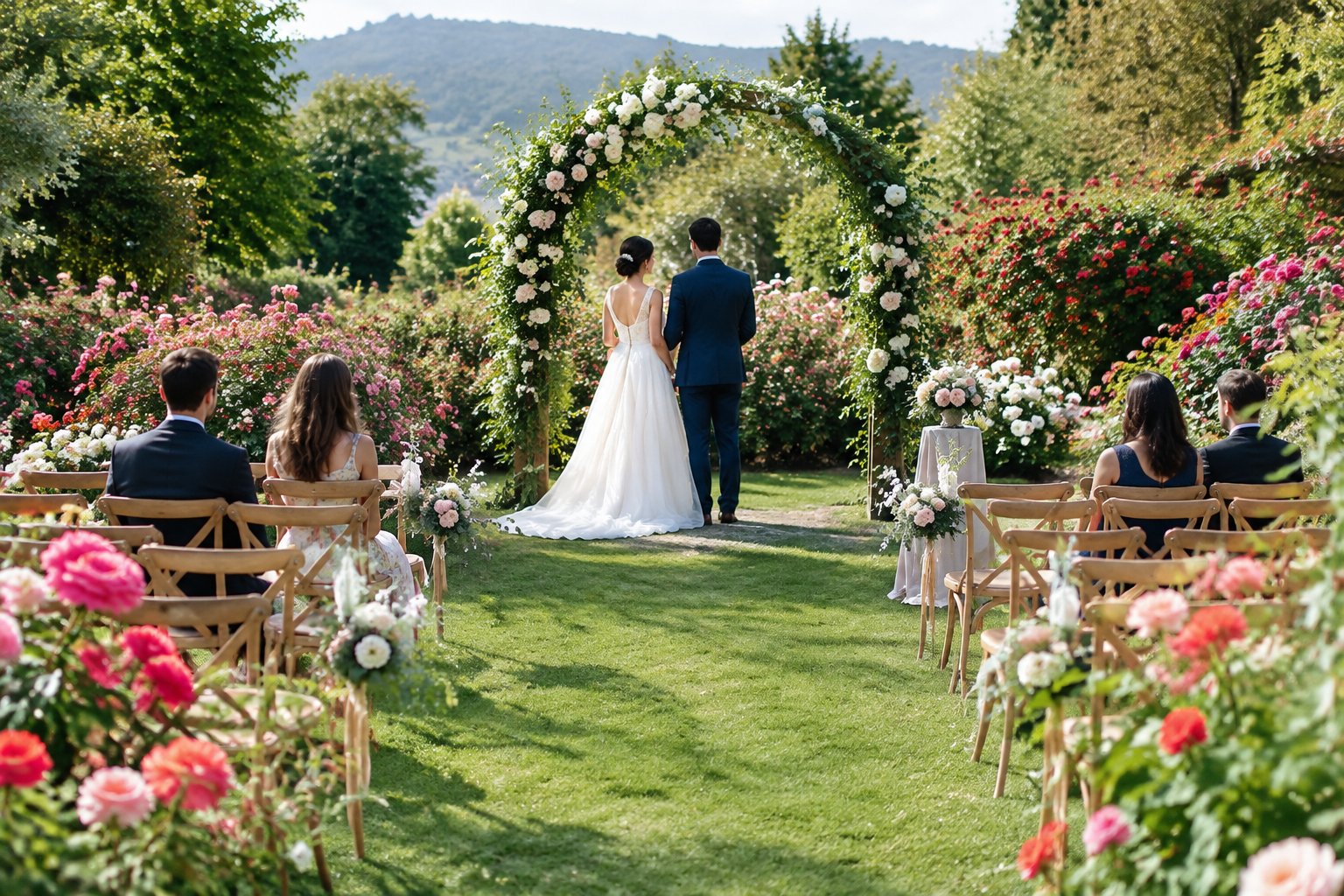
Roses bring texture, color, and a familiar floral scent to your ceremony space. Their range of colors can suit many wedding styles, and the garden itself provides visual detail around the aisle, arch, and guest seating.
You can keep added décor light, then choose a few details that complement the existing flowers. Ask how the ceremony area looks from the guest seats and where the sun falls at your planned time.
That helps you choose an arrangement with clear views and comfortable seating. For more ways to shape the setting, explore these outdoor wedding ceremony ideas.
When Do Rose Gardens Typically Bloom?
Bloom timing varies by region, rose variety, and weather, so ask the garden team about its seasonal pattern before you choose a date. Many gardens have a spring or early-summer flush, while some roses rebloom later in the season.
A visit near your preferred date in a previous year can help you picture the grounds, though each season brings its own conditions.
How to Compare Venues Before You Book
Compare each wedding venue by its practical details as well as its garden views. Guest comfort, indoor options, access times, and written policies help you see how well an event venue supports your plans.
What Capacity and Privacy Do You Need?
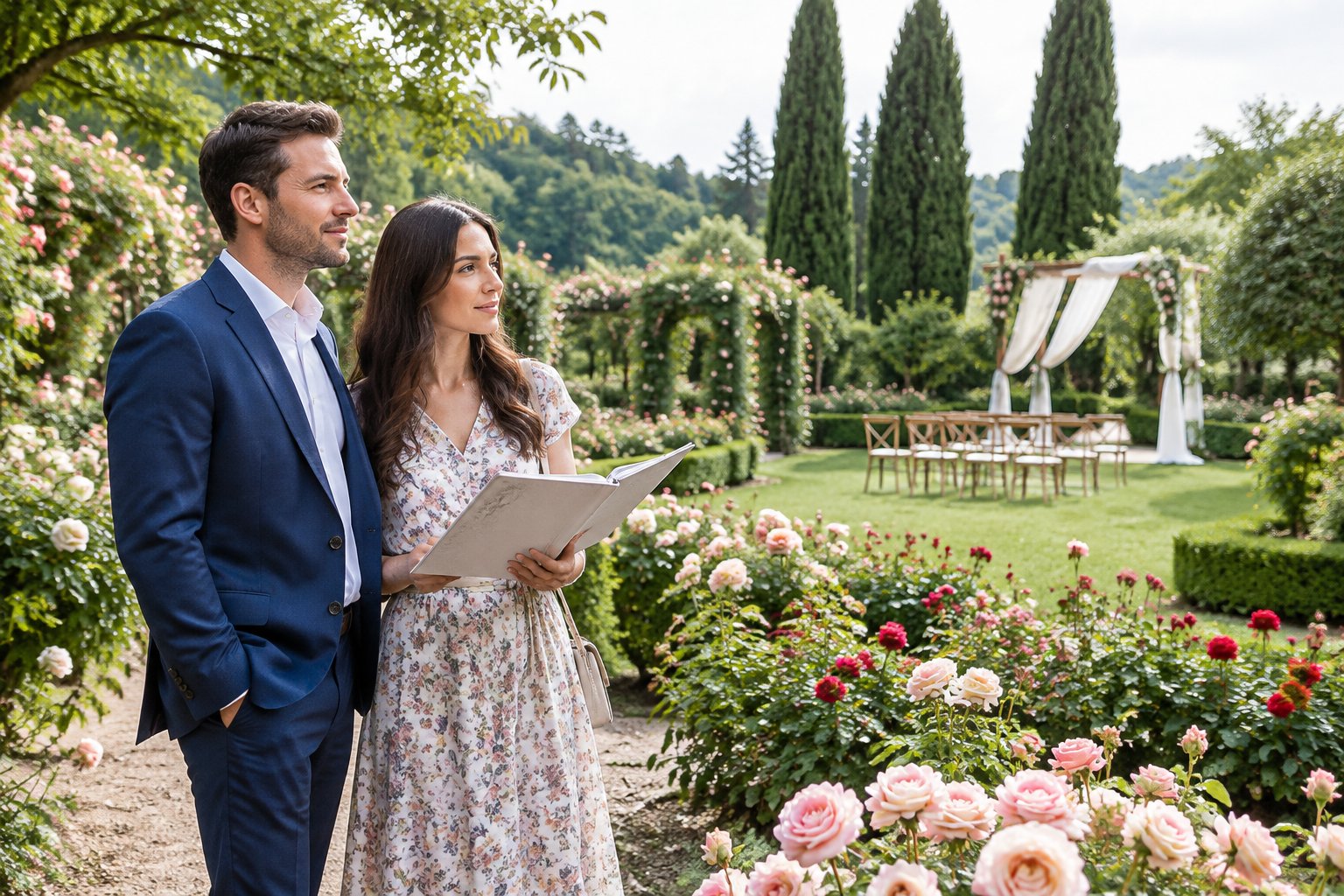
Choose a venue that can seat your guest list comfortably, with room for the ceremony layout and any reception spaces you plan to use. Ask for the capacity with chairs arranged, then check whether the garden is private during your rental or open to other visitors.
Public access can affect ceremony privacy, sound, and guest movement. Walk the route from parking to the ceremony area, and check for steps, uneven paths, shade, and nearby restrooms.
These details help you assess how the setting will work for guests with different mobility needs. Use a consistent checklist as you choose a wedding location.
Are Reception Spaces and Weather Plans Available?
Confirm whether the venue hosts both your ceremony and reception, or if you’ll need a second location. Some gardens offer indoor rooms, covered patios, or a partner event space.
Ask to see the weather plan and find out who makes the call if rain, wind, or high temperatures affect the outdoor setup. Clarify what the backup space includes, such as seating, restrooms, and a path between event areas.
If your reception is elsewhere, check travel time and how your guests will get there.
Which Rules Apply to Decor, Vendors, and Public Hours?
Ask for the venue’s rules in writing before you book. Policies may cover outside vendors, sound, open flames, flower petals, décor attachments, setup windows, and cleanup.
Public gardens may also set limits on where guests can gather and when event access begins or ends. Confirm whether your vendors need insurance or approval, and ask who handles furniture setup.
Make sure your schedule allows enough time for deliveries and breakdown within the rental period.
Garden Venues to Research
Garden venues vary in location, scale, and event policies, so research each property directly before treating it as an option. The McGill Rose Garden in Charlotte has published wedding details, while botanical gardens and Japanese garden settings call for venue-specific questions about access and event use.
McGill Rose Garden in Charlotte
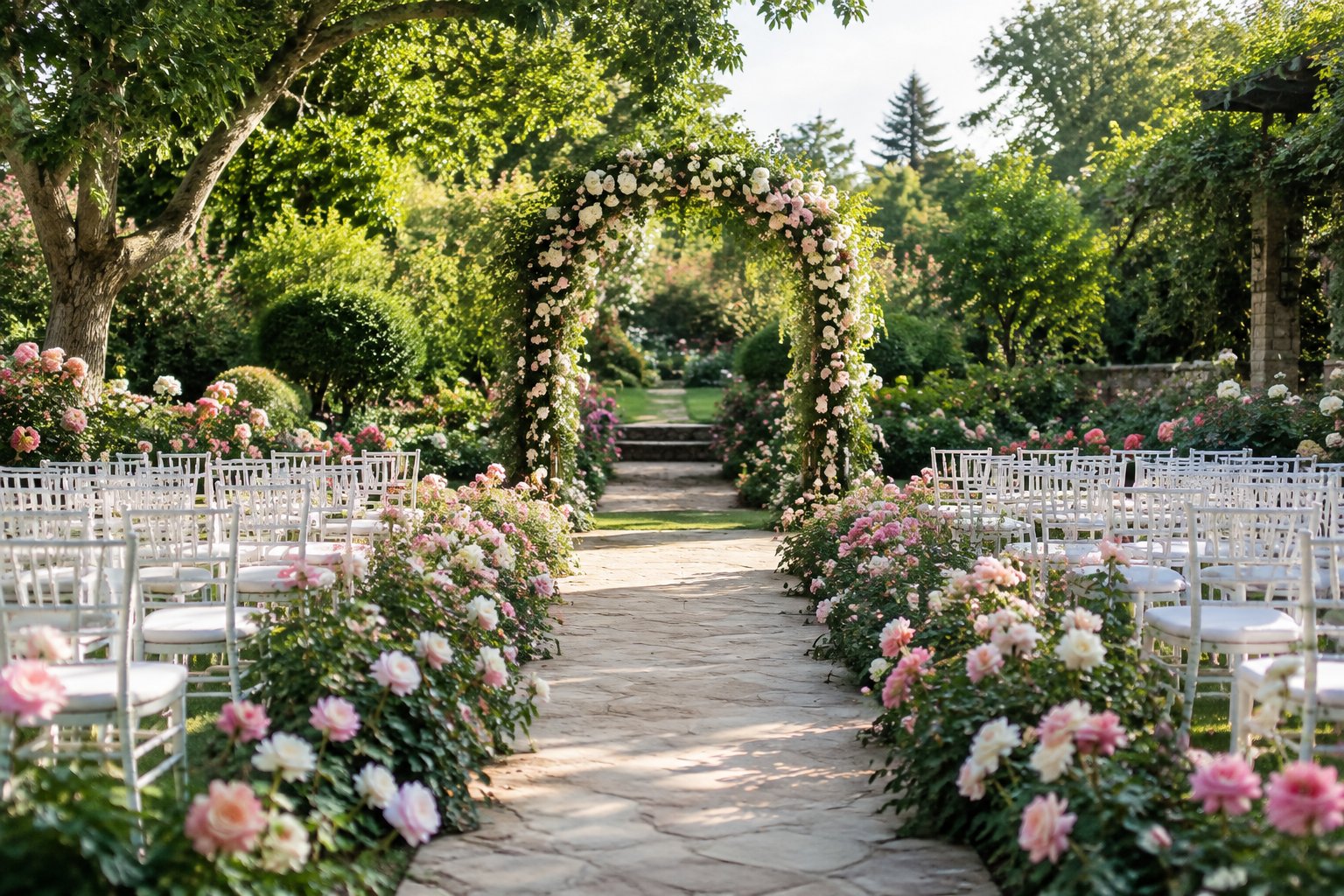
The McGill Rose Garden offers wedding packages and has a maximum capacity of 100 people. Its wedding season runs from the last weekend in April to the first weekend in November on Saturdays.
The garden also allows elopements and micro weddings of 10 people or fewer during public hours, with no reserved area for those small gatherings. If you’re considering a private wedding, ask about current availability, package details, and setup timing.
For public-hours ceremonies, follow the garden’s posted rules, which prohibit items such as arches, outside furniture, and rose petals.
Brooklyn Botanic Garden in New York
Brooklyn Botanic Garden includes the Cranford Rose Garden, a well-known rose collection in the city. If you’re considering it for a wedding, contact the garden to confirm which spaces are available for events and what guest access, season, and rental rules apply.
You can compare it with other botanical garden wedding venues as you build your shortlist.
Cleveland Botanical Garden in Ohio
Cleveland Botanical Garden offers a botanical setting to research for your celebration. Ask its events team about ceremony and reception spaces, guest capacity, rental hours, and whether rose displays are part of the area available on your date.
A venue visit can help you check the flow between indoor and outdoor areas.
Japanese Garden Settings
A Japanese garden can offer a calm setting shaped by water, stone, bridges, and carefully planned plantings. Rose displays may not be the main feature, so confirm which flowers and garden areas will be visible during your event.
Ask about ceremony layouts, photography rules, and any limits designed to protect the landscape.
Planning a Ceremony Among the Roses
A rose garden ceremony works best when your date, guest setup, and vendor schedule match the garden’s season and rules. Confirm bloom timing with the venue, then build a practical plan for rentals and setup.
How Can You Time Your Date for Peak Blooms?
Ask the garden team which weeks have brought the strongest blooms in recent years, and whether the roses flower in waves or have one main display period. Your region’s climate and the garden’s rose varieties shape the answer.
If you have flexible dates, compare a few options with the venue’s seasonal notes. Keep your ceremony time in mind, too.
Morning and late-afternoon light can feel gentler than midday sun, while shade and temperature vary across the garden. A visit at your planned ceremony time gives you a better sense of guest comfort and the setting’s light.
What Should You Ask About Rentals and Setup?
Get an itemized list of what the venue provides and what you need to rent. Ask who sets up chairs, whether the ceremony arch is allowed, and when your florist and other vendors can arrive.
Confirm where deliveries go and how long cleanup can take. Check whether the venue provides a rehearsal, onsite support, or a designated contact for event day questions.
If you’re adding personal décor, ask how it can be secured without harming plants or structures. These details help you plan a garden ceremony that follows the venue’s care rules.
Are Rose Gardens Right for Elopements and Micro Weddings?
Rose gardens can suit elopements and micro weddings when the venue allows small gatherings and the guest count fits its rules. You’ll want to confirm whether the ceremony area can be reserved, especially at public gardens.
What to Know About Small Ceremonies at McGill Rose Garden
McGill Rose Garden permits elopements and micro weddings of 10 people or fewer during public hours, but it does not reserve a dedicated area for them. The garden asks small groups to respect other visitors and keep clear of roped-off ceremony spaces.
Its rules also prohibit arches, outside furniture, rose petals, and several other additions. Check the current policy before choosing a date, since public access and wedding events affect where your group can gather.
If you’re deciding between a micro wedding and an elopement, start with your guest count and the level of privacy you want.
How to Keep an Intimate Garden Celebration Low-Impact
Keep your setup compact and follow the garden’s rules for access, décor, sound, and photography. Choose items you can carry in and remove easily, such as personal flowers or small, hand-held details when permitted. Avoid attaching anything to trees or structures unless the venue approves it.
For a public garden, keep your group together and leave paths open for other visitors. Confirm the meeting point and timing with guests in advance, then share the venue’s restrictions so everyone arrives prepared.