
Typical Catering Cost per Person for Wedding: 2026 Guide
Wedding catering in the U.S. commonly costs about $50 to $150 per guest before every quote-specific fee, with roughly $80 per person serving as a useful starting benchmark. Your total depends on the menu, service style, guest count, location, and whether drinks and rentals are included.
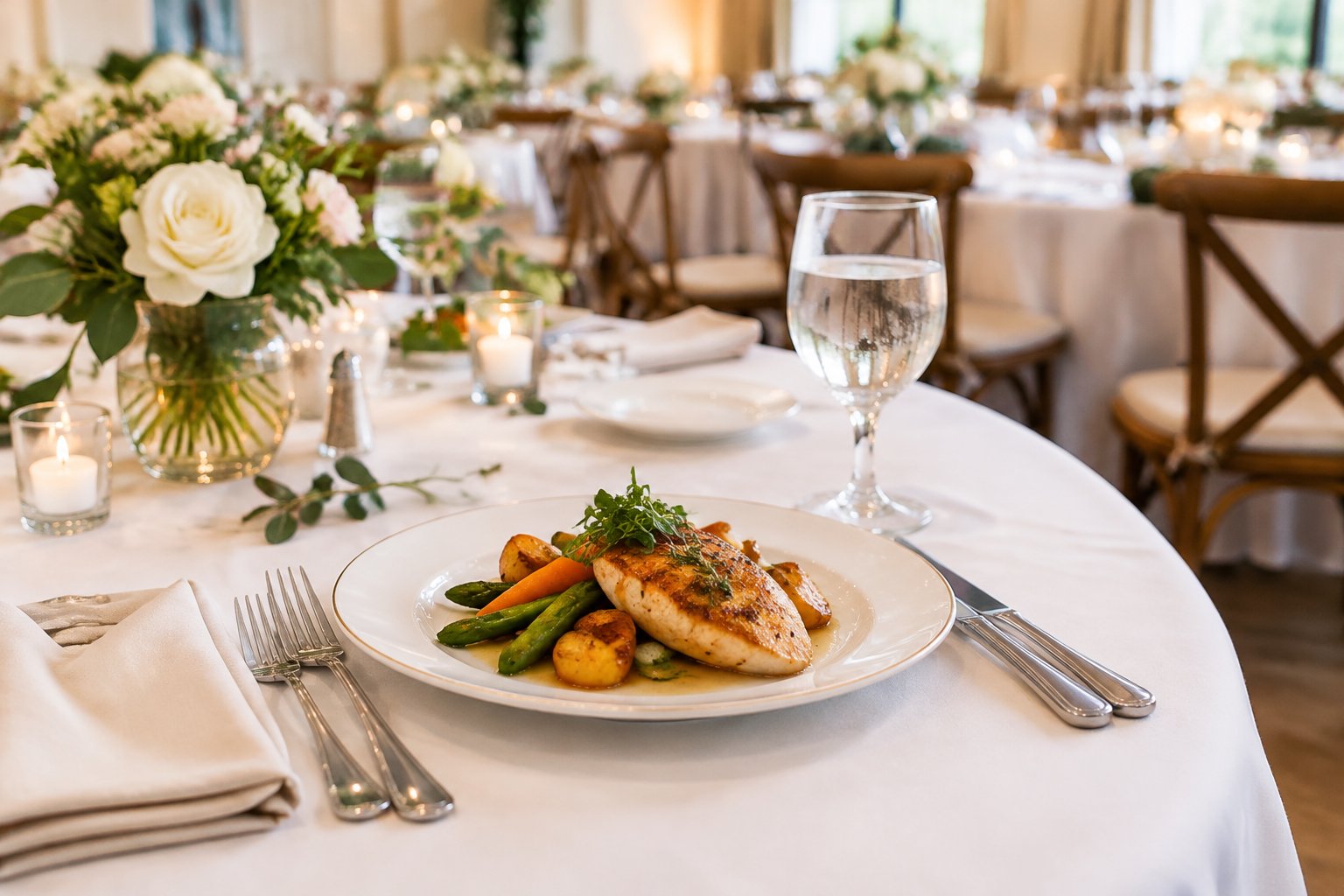
For a 100-person reception, that range works out to about $5,000 to $15,000 before charges such as tax, gratuity, or a separate bar package. Ask caterers for a full estimate based on your guest count and menu so you can set a realistic budget.
What Should You Budget per Guest?
A practical starting budget is $50 to $150 per guest for food and service, with the final amount shaped by what your caterer includes. Check whether the quote covers drinks, rentals, and fees before using its per-person rate to plan your total.
For a closer look at catering cost for a wedding, include the full guest count and service needs in your estimate.

What Is the Typical Price Range for Wedding Catering?
A useful planning range for wedding catering is about $50 to $150 per guest before some fees and add-ons. A simple buffet with a focused menu may land near the lower end. A formal plated meal with premium ingredients, multiple courses, or a full bar can push the price higher.
National estimates differ because caterers count different things in their prices. One average may cover food and basic labor, while another includes beverages, rentals, or service charges. Treat the average catering cost as a starting point, then compare quotes that include the same items.
You can also review catering for weddings average cost as a budgeting reference.
How Does the Total Change With Guest Count?
Your total bill rises with each added guest, while your per-person rate can fall as fixed event costs are shared across a larger group. If your caterer charges $80 per person, 75 guests would cost $6,000 and 150 would cost $12,000 before fees. The final quote may also include fixed costs for delivery, setup, or staffing.
Smaller weddings can face minimum charges that raise the effective cost per guest. For a 200-person reception, multiply the quoted rate by 200, then confirm whether higher attendance changes staffing, rental, or bar requirements.
A guide to catering cost for a 200-person wedding can help you build that estimate.
How Does Service Style Affect the Price?
Buffet service often costs less than a plated meal because it requires less table service, while stations and shared meals bring different staffing and food needs. Your choice also shapes how guests move through the reception and how the meal feels.
Ask each caterer to price the same menu in the service styles you are considering.

| Service style | Planning range per guest | Main cost driver |
|---|---|---|
| Buffet | $40-$80 | Food volume and attendants |
| Plated | $65-$150 | Servers and course timing |
| Family-style | $50-$90 | Platter portions and table service |
| Food stations | $45-$100 | Number of stations and attendants |
These are broad planning estimates before all possible fees. Your local quote may fall outside them based on menu, venue, and service details.
How Much Does a Buffet Usually Cost?
A buffet often runs about $40 to $80 per person before added fees, though menu choices and local labor rates affect the quote. Guests choose their portions, and the caterer needs attendants to keep food replenished and the serving area tidy.
A buffet can include several entrée choices, though more options and premium ingredients raise the food cost. Ask how the caterer plans portions and whether the quote covers buffet attendants, plates, and serving equipment. If guests are likely to return for seconds, account for that when selecting the menu.
What Do Plated, Family-Style, and Station Meals Cost?
Plated meals often cost about $65 to $150 per guest because servers deliver each course and the kitchen prepares individual plates. A set menu with a limited number of entrées can help keep the quote manageable. Confirm how guests will choose meals and how the caterer handles dietary requests.
Family-style service commonly falls around $50 to $90 per person. Large platters go to each table, so you pay for table service and enough food for sharing. Stations may range from $45 to $100 per guest, depending on the number and complexity of the setups.
For current catering rates for weddings, request prices using your actual menu and guest count.
Can Drop-Off Catering or Food Trucks Save Money?
Drop-off catering can lower labor costs when you need food delivered and set out without full table service. Your venue must have a workable setup for hot food, serving, and cleanup, or extra equipment and staff can reduce the savings.
Food trucks can suit a casual reception, especially when you offer a small menu and plan service time around the line. Ask about minimum charges, travel fees, staffing, and whether the truck can serve your full guest count within your meal window. Price the full setup, including plates, drinks, and cleanup, before comparing it with a traditional caterer.
What Is Included in a Caterer’s Quote?
A catering quote may cover food, staff, setup, and rentals, but each caterer defines its package differently. Look at each line item and identify any expenses handled by your venue or another vendor.
Request the full breakdown in writing before you compare the per-person prices.
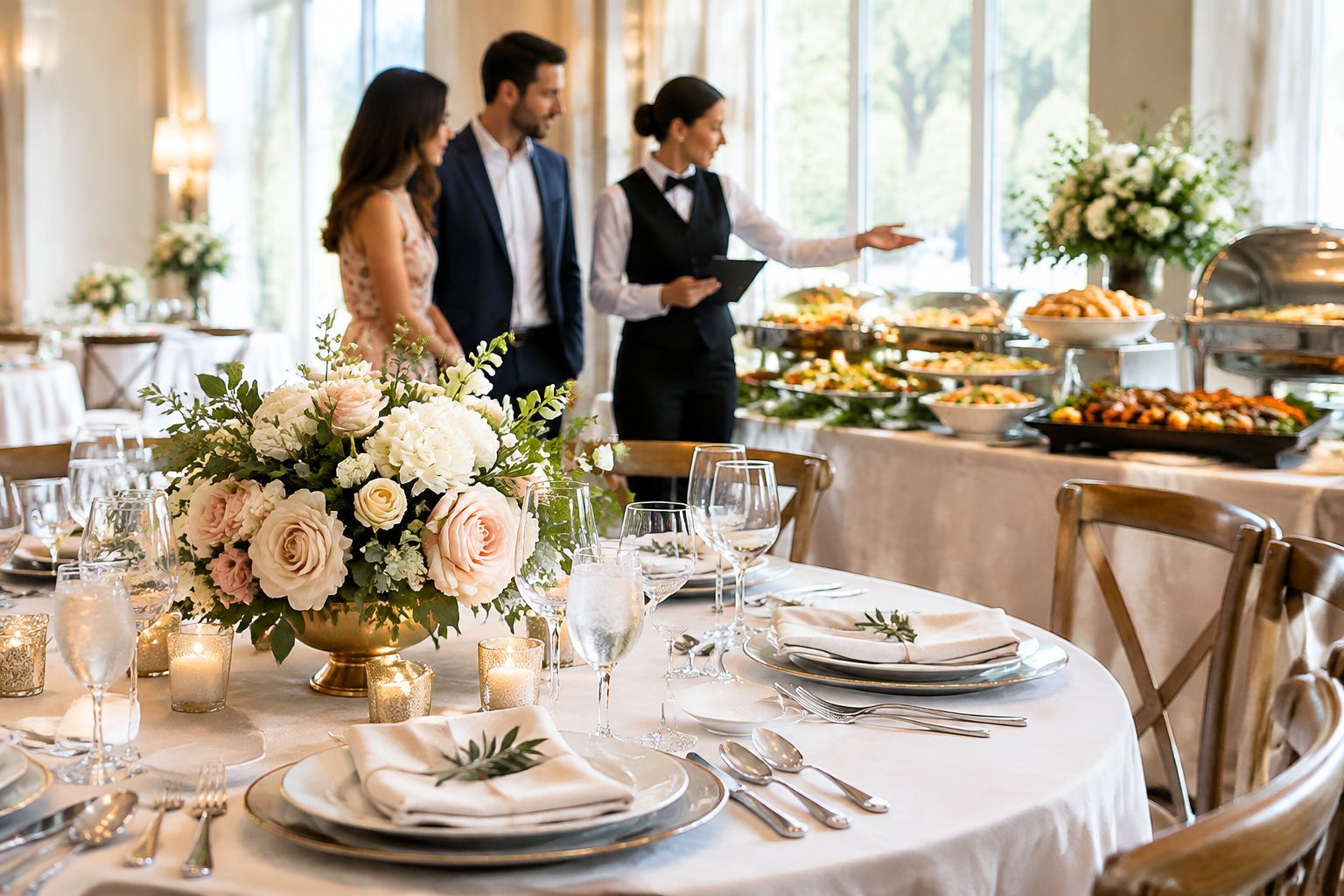
Which Food and Service Items Are Usually Included?
A quote may include appetizers, the main meal, sides, dessert, and nonalcoholic drinks. Service packages can include chefs, servers, bartenders, setup, and cleanup. Some caterers also include standard plates, flatware, glassware, linens, or serving pieces.
Ask whether the price covers a tasting, vendor meals, and any children’s meals. Clarify which items are part of the package and which are optional upgrades.
A careful review of your catering contract and wedding cost can help you spot costs that sit outside the initial estimate.
Which Fees and Extras May Be Added?
Your final bill may include a service charge, gratuity, sales tax, delivery, or rental costs. Service charges and tips are separate line items in some quotes, so ask where each amount goes and whether staff gratuity is already included.
Other possible expenses include cake cutting, corkage for outside wine, overtime, extra setup labor, and equipment for a venue without a commercial kitchen. Ask the caterer to show these charges in a sample final total. A low base rate can grow once the additional costs are added.
What Factors Can Push Catering Prices Higher?
A premium location, a peak date, a complex menu, or extra service needs can raise your catering cost per person. Your venue’s facilities and your guest requirements also affect the work involved.
Sharing those details early helps caterers give you estimates that are easier to compare.
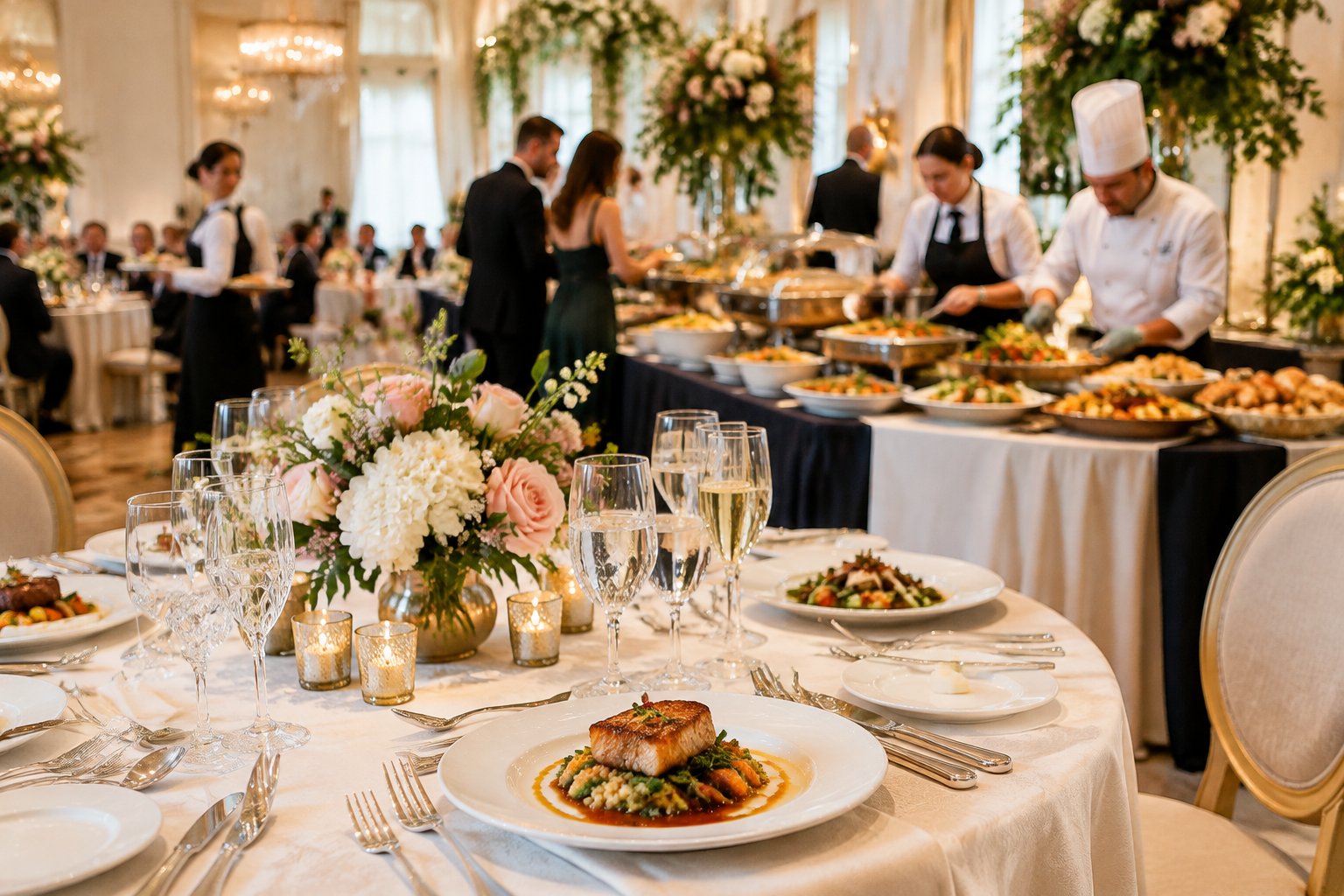
How Do Location, Season, and Date Affect Prices?
Catering prices tend to be higher in major cities where labor, transport, and ingredient costs are elevated. A remote venue, long carry distance, limited parking, or tight load-in window can add staff time and equipment needs. A venue with a full kitchen and useful rentals may help reduce those costs.
Saturday evenings and peak wedding months draw more demand, which can affect availability and rates. Ask whether a Friday, Sunday, or off-season date changes the quote. Seasonal ingredients can also help control menu costs, especially when you let the caterer suggest dishes based on what is fresh and easy to source.
How Do Menu Choices and Dietary Needs Change the Cost?
Premium proteins, seafood, specialty ingredients, and multi-course meals can increase food and preparation costs. A menu with several entrée options also requires more planning and can create extra kitchen work. A focused menu built around seasonal ingredients can keep choices appealing while limiting added complexity.
Dietary needs require clear planning, especially when guests have allergies or need vegetarian, vegan, or gluten-free meals. Share the expected number of guests with each need and ask how the caterer prevents cross-contact. A specific count helps the kitchen prepare appropriate meals without over-ordering.
How Can You Compare Caterers and Stay on Budget?
Compare local caterers using the same guest count, menu, service style, and list of included fees. The lowest starting price may cover fewer services, so ask for a complete estimate before choosing.
Review how to choose the right wedding caterer as you weigh service quality and price.
What Should You Ask Local Caterers?
Give each caterer the same details: date, venue, guest count, meal timing, and service style. Then ask:
- What food, drinks, staff, rentals, setup, and cleanup are included?
- Which service charges, taxes, gratuity, and extra fees apply?
- Is there a minimum spend or a different rate for children and vendors?
- How do you handle allergies and dietary requests?
- When is the final guest count due, and how are later changes billed?
- What happens if the event runs past the contracted service time?
Ask about tasting costs, payment dates, and cancellation terms before signing. Requesting catering quotes with the same event details gives you a clearer basis for comparison.
How Can You Compare Catering Quotes Fairly?
Compare the total estimated bill, not only the per-person rate. Check that each quote covers the same menu, portion sizes, service hours, staffing, rentals, and bar plan. Note whether the final guest count or a minimum spend sets the bill.
Ask caterers to identify what could change the price after you book. A quote with separate costs for delivery, overtime, or rental upgrades can be easier to evaluate than a bundled estimate with unclear terms. Keep the details in writing so you can compare line by line.
Which Choices Can Lower Your Final Bill?
Choose a buffet or a focused family-style menu if the experience fits your reception. A brunch or lunch event, an off-peak date, or a shorter bar service window can also reduce costs.
Use venue plates and glassware when they meet your needs, and ask the caterer to build the menu around seasonal ingredients. Keep your guest count accurate, since every additional person can add food, drinks, and rentals to the total.
Limit expensive ingredients to a few standout items, and choose beer and wine or a signature drink if a full bar exceeds your budget. If you want to adjust a proposal, use practical ways to negotiate catering prices and ask about menu changes or service options that preserve the parts you value.