
Outdoor Venues for Weddings: A Guide to Choosing the Right Setting
Outdoor venues for weddings give you a celebration shaped by natural scenery, fresh air, and a setting that reflects your style. Choose a place that fits your guest count and has a clear plan for comfort and changing weather. Then check how the ceremony, reception, and backup spaces work together.
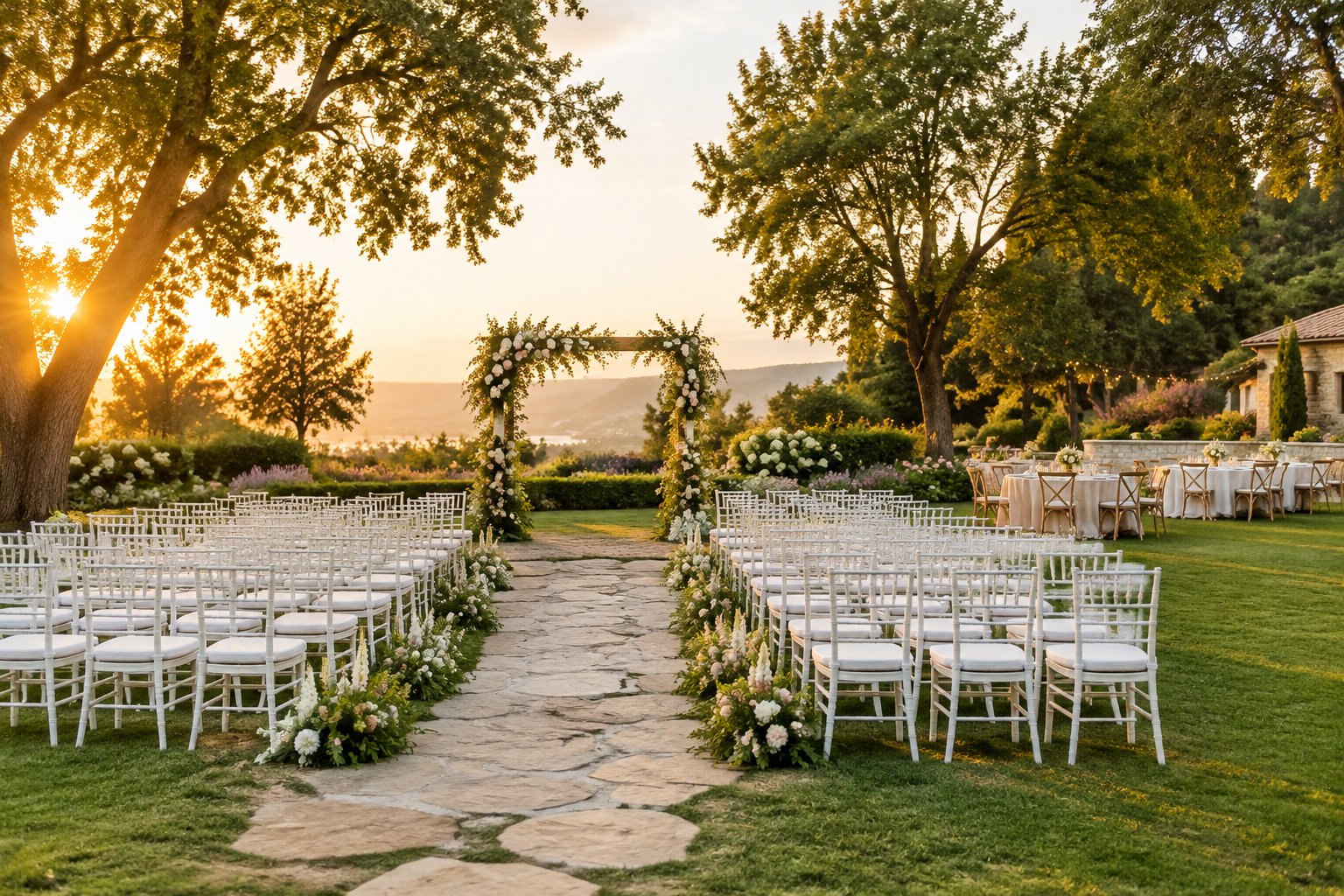
Start your search by listing your must-haves, such as a waterfront view, room for dancing, or easy access for guests. A few clear priorities will help you choose a wedding location with confidence, so take a moment to write yours down before you book tours.
What Outdoor Setting Fits Your Wedding?
Your setting shapes the mood of the day and the practical details, from walking paths to travel time. Think about how much natural scenery you want, how private you’d like the space to feel, and what your guests will do between each part of the celebration.
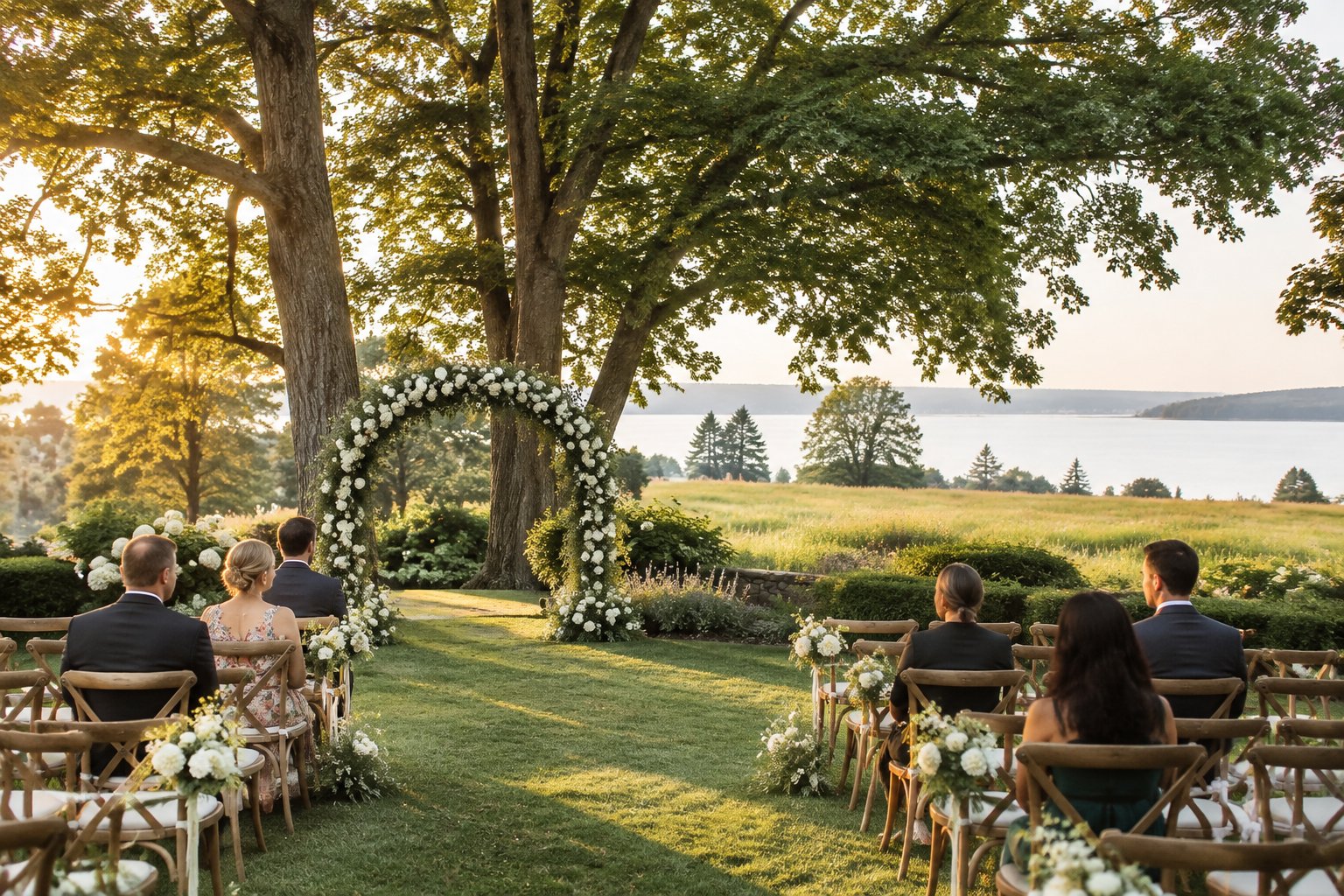
Gardens, Greenhouses, and Estates
Gardens, greenhouses, and estates suit a romantic celebration with greenery and flowers close at hand. A garden’s existing paths and planted borders can help guide guests, while a greenhouse offers shelter with a view of the landscape.
Estates may include several event spaces above the grounds, such as lawns, terraces, or historic buildings, so ask which areas are included in your rental.
As you tour garden venues for weddings, check how the space looks in your season. Ask what is in bloom around your date and whether the ceremony area has level ground for chairs.
Beaches and Coastal Views
A beach or coastal venue brings open views, sea air, and a relaxed feel. Ask about permits, public access, wind exposure, and the distance between the ceremony area and reception space.
Sand can make walking and chair placement harder, so look for firm paths or a nearby lawn for guests who need steadier footing.
Mountains, Forests, and Farms
Mountain, forest, and farm settings offer broad views or a quiet, rural atmosphere. A ceremony above the tree line may have little natural shade, while a forest clearing can have uneven ground and limited light after sunset.
On a farm, confirm which areas guests can use and whether animals, working equipment, or nearby events affect the day.
For more beautiful outdoor wedding venues, compare the landscape with the setup it requires. A dramatic view can come with longer walks, limited parking, or extra rentals.
Rooftops and City Event Spaces
Rooftops and city event spaces pair open-air views with nearby hotels, restaurants, and transit. Check elevator access, noise rules, rooftop wind, and how guests will reach the space.
Ask whether the rooftop connects to an indoor room that can support the celebration if conditions change.
What Should You Look for in an Outdoor Wedding Venue?
Choose wedding venues that fit your guest count, keep the day moving smoothly, and provide services you can confirm in writing. A venue’s listed maximum is only one part of the decision; the usable layout and the spaces included in your rental affect how your guests experience the day.
Guest Capacity and Ceremony-to-Reception Flow
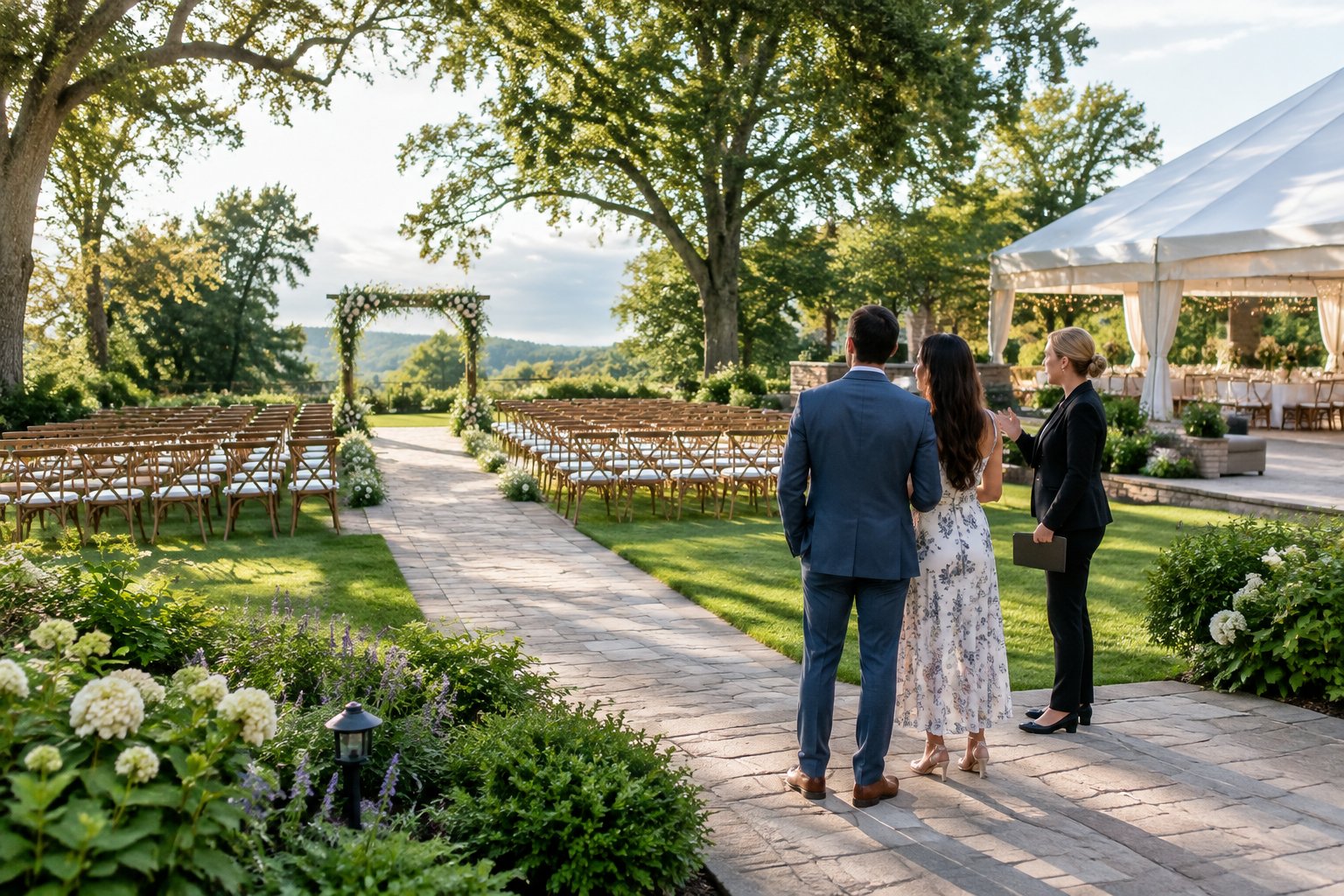
Ask for the comfortable seated capacity with your planned layout, including dinner tables and a dance floor. Then walk the route from parking to the ceremony, cocktail hour, and reception.
Short, clear routes help guests find each space and give vendors room to move equipment. If the ceremony and reception happen in different areas, ask who resets the ceremony space and how long that takes.
Outdoor wedding seating ideas can help you consider chair layouts, aisle width, and room for guests with mobility needs.
Indoor Backups, Tents, and Ballrooms
A weather backup should be a specific space you can see and assess for your guest count. Ask how the layout changes indoors, whether the backup is included in your fee, and who makes the call to move the event.
If the plan involves a tent, check whether the venue provides it or whether you’ll need to arrange a rental. Some indoor-outdoor wedding venues offer a useful mix of open-air and sheltered spaces.
Confirm that the indoor option can accommodate your ceremony or reception with seating, food service, and room for guests to move around.
Accessibility, Accommodations, and Venue Services
Walk the property with your guest list in mind. Check for firm paths, accessible restrooms, nearby lodging, and a place for older guests to sit between activities.
Ask what the venue provides, such as tables, chairs, setup, cleanup, a coordinator, or parking attendants. Get vendor rules in writing, including requirements for catering, alcohol service, music, insurance, and arrival times.
Clear details help you understand which services are included and what you’ll need to arrange separately.
How Can You Plan for Weather and Guest Comfort?
Plan for the conditions your venue and season bring, including sun, wind, rain, and cool evenings. A clear backup plan, comfortable seating, and basic facilities help guests enjoy the day while your team knows how to respond if conditions change.
Rain Plans and Seasonal Conditions
Ask to see the exact space you’ll use if rain changes your plans. Find out who makes the call, when the decision happens, and how the venue will notify vendors and guests.
Check what happens after heavy rain, too: soft ground can affect walking routes, furniture placement, and vendor access. Seasonal weather calls for more than a rain plan.
Ask about wind on exposed areas, possible thunderstorms, and how the venue handles a sudden change in conditions. These outdoor wedding tips can help you make a practical plan for the setting and season you choose.
Shade, Lighting, and Temperature
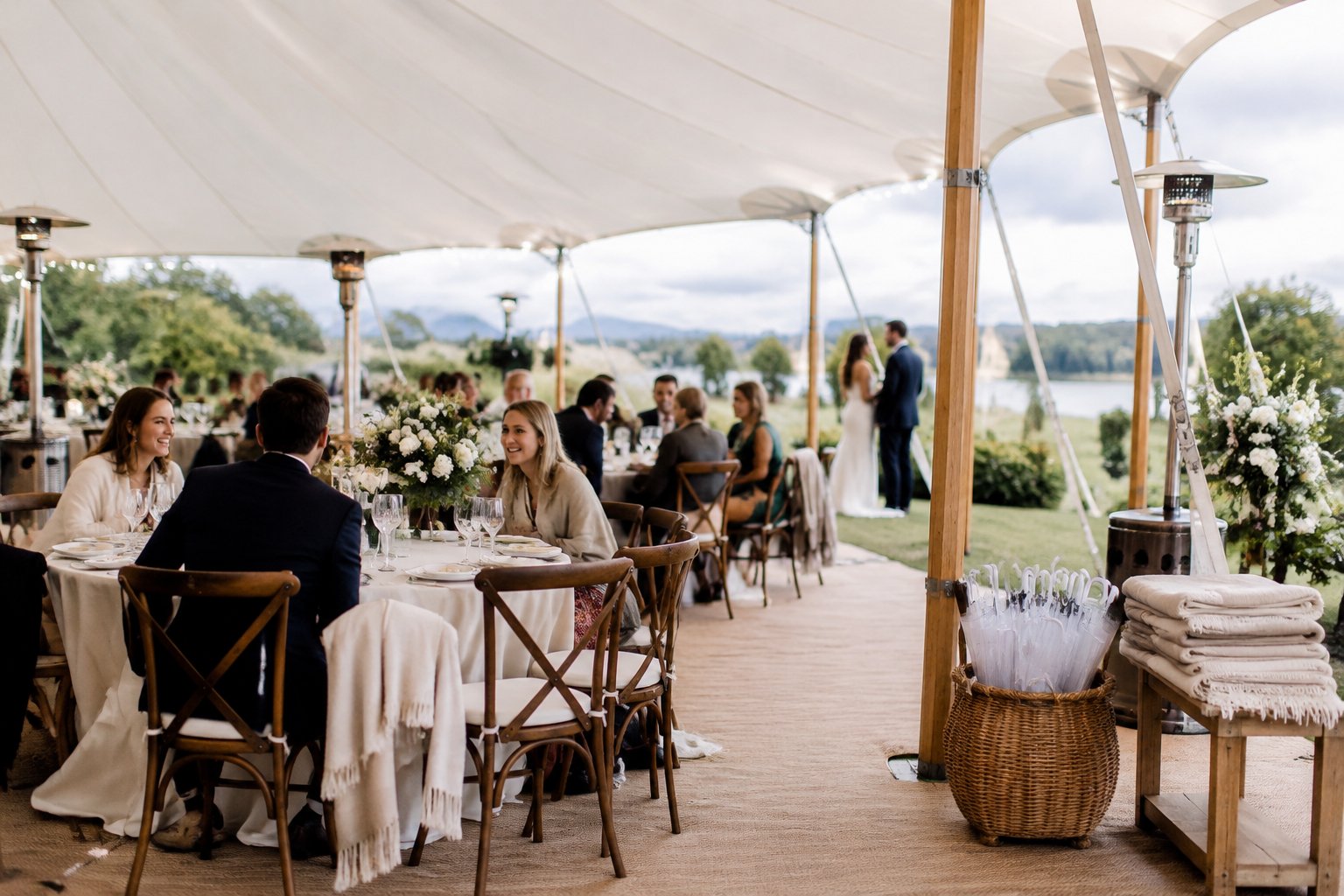
Check where the sun falls during your ceremony and whether trees, umbrellas, or a covered area provide shade. For a warm day, ask about fans, water stations, and places where guests can cool off.
For a cool evening, find out whether heaters or indoor areas are available and whether the venue permits guest blankets. Ask how the property is lit after sunset, especially along paths, steps, and parking areas.
If your site is exposed to breezes, consider windy wedding tips when planning ceremony décor and printed materials.
Restrooms, Parking, and Accessibility
Locate the restrooms and walk from them to the ceremony and reception areas. Ask about accessible routes, available parking, and any shuttle needs for guests traveling between locations.
If the ceremony takes place far from the reception, confirm how guests will get there and whether signs or staff will direct them.
How Much Does an Outdoor Wedding Venue Cost?
Your total venue cost includes the rental fee plus the services, rentals, and staffing needed for your event. Compare written estimates with the same guest count and event plan so you can see which expenses are included and which will be added later.
Rental Fees, Catering, and Service Charges
Ask what the rental fee covers and whether the price changes by date, season, or length of rental. Confirm the payment schedule, deposit terms, taxes, service charges, overtime fees, and any cleanup costs.
If catering is separate, ask whether you can choose your own caterer or need to use an approved list. Build your venue limit into the full wedding budget before signing.
This guide to how much of your wedding budget to spend on a venue can help you set a starting range and leave room for the rest of the celebration.
Rentals, Décor, and Setup Costs
List the items you’ll need to rent or bring in, such as chairs, tables, a tent, lighting, sound equipment, and portable restrooms. Ask whether setup and breakdown are included, and check how long vendors have to load in and clear the site.
Outdoor settings can have extra delivery needs if equipment must travel across lawns, gravel, or long paths. Compare the full estimate with what most wedding venues cost as a planning reference, then focus on the line items for your location and event plan.
Questions to Ask About the Full Budget
Request a written estimate that lists every known fee. Ask which costs depend on your guest count, what happens if the event runs late, and whether you’ll pay extra for a tent or a weather-plan space.
Confirm which services you must book separately and whether the venue charges for outside vendors.
How Do You Compare and Book Your Top Choices?
What to Check During a Venue Tour
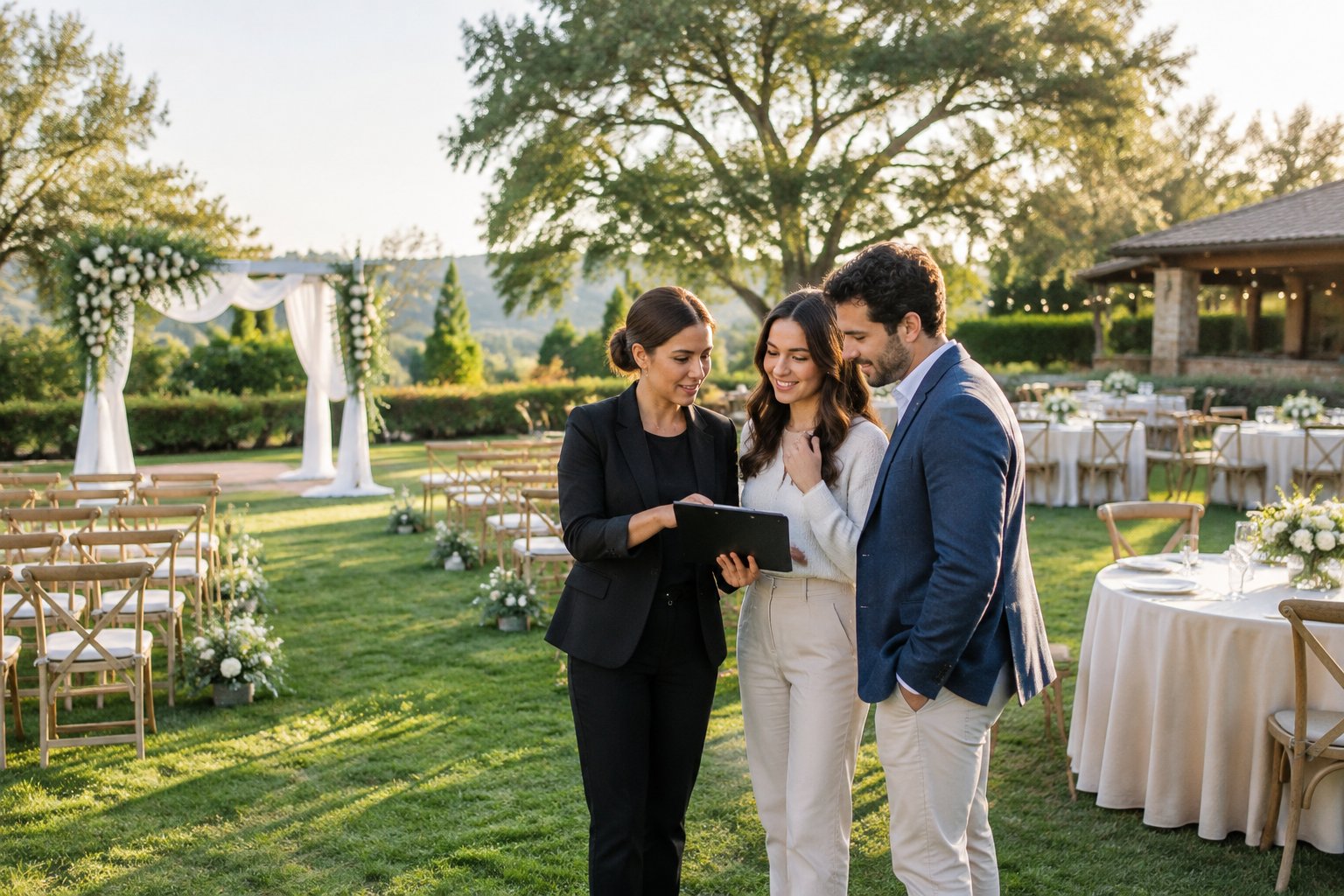
Walk the guest route from parking to the ceremony, reception, and restrooms. Check the ground, shade, lighting, and indoor backup space.
Ask who will be on site during your event and what that person handles. Write down the available dates, setup time, cleanup deadline, included items, and vendor rules.
If you’re comparing local outdoor wedding venues, include travel time and nearby lodging in your notes.
Compare Outdoor Settings with Indoor Options Like Seventh Place
Compare an outdoor setting with an indoor option like Seventh Place by looking at the guest experience and the plan for your event. An outdoor space gives you open-air scenery; an indoor setting offers shelter within the event space.
Check the details with each venue, since layouts, services, and backup arrangements vary.
| What to compare | Outdoor setting | Indoor option like Seventh Place |
|---|---|---|
| Ceremony atmosphere | Open-air scenery | Enclosed event space |
| Weather exposure | Plan for outdoor conditions | Guests are indoors |
| Layout | Check paths and ground | Check room layout |
| Backup plan | Confirm a covered or indoor space | Ask about alternate rooms |
| Extra setup | Check tent and lighting needs | Check included equipment |
Review Contracts, Vendor Rules, and Availability
Before you sign, confirm the date, rental hours, payment terms, cancellation policy, and every included service. Review rules for vendors, alcohol, sound, decorations, and cleanup.
Ask for any verbal promises to be added to the contract, then make sure the written agreement matches your budget and event plan.