
Outdoor Wedding Venues New Orleans: How to Choose
New Orleans gives you several distinctive ways to celebrate outdoors, from leafy courtyards to terraces with river views. For outdoor wedding venues in New Orleans, a garden or courtyard offers a lush local setting, while a rooftop or riverfront venue gives you open views and a downtown feel.
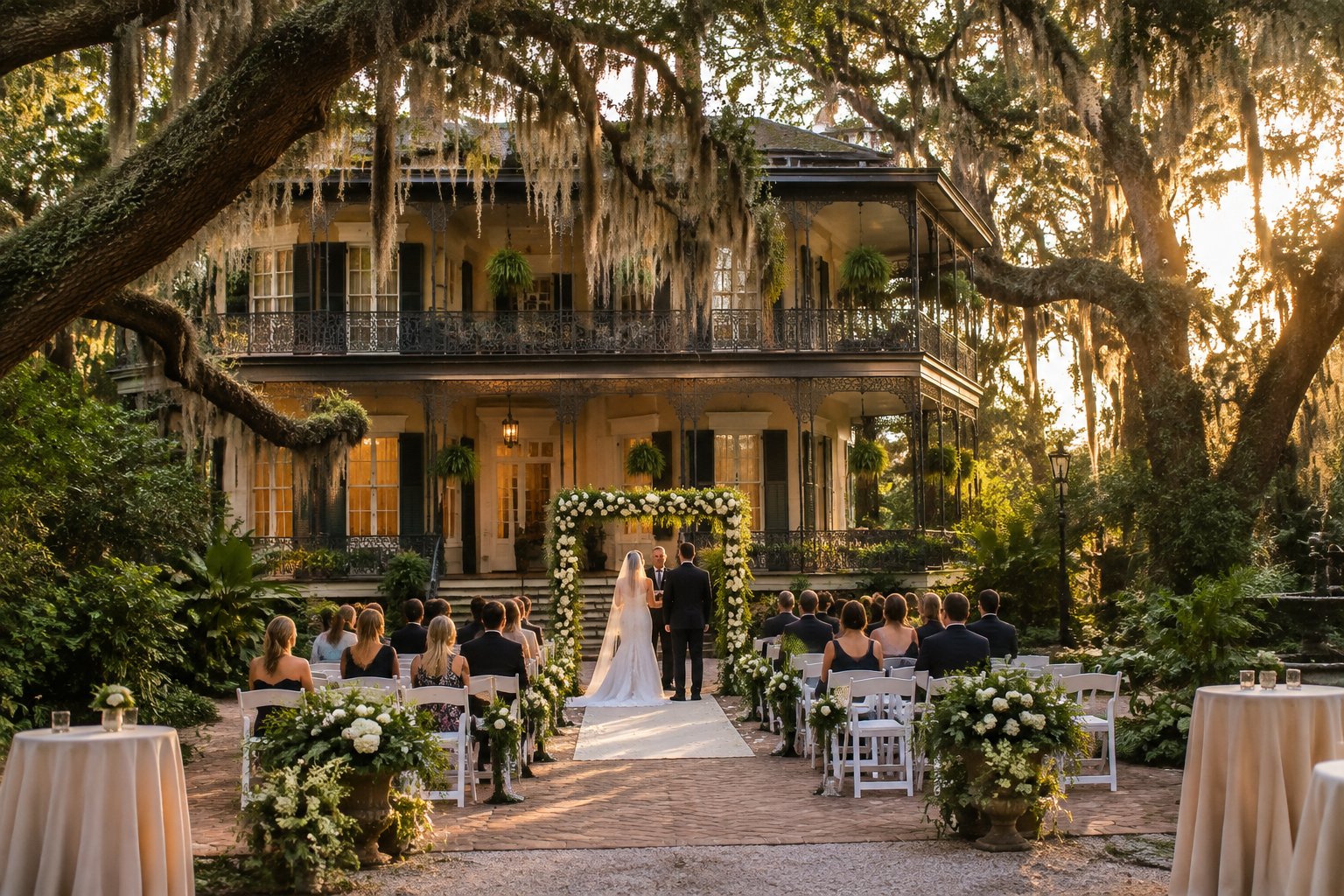
As you compare venues, look closely at guest comfort, access, and the plan for rain or heat, along with the setting itself. If a garden-forward celebration sounds right, you can schedule a tour at Paradigm Gardens to explore its wedding packages and availability.
Guests coming from out of town? Compare hotels and rentals near New Orleans for your dates.
Which Outdoor Venue Setting Fits Your Wedding?
The right setting shapes your ceremony atmosphere, guest experience, and event logistics. Garden spaces offer greenery and shade, rooftops and riverfront terraces bring broad views, and historic properties add architectural character.
What Makes a Garden or Courtyard Venue Special?
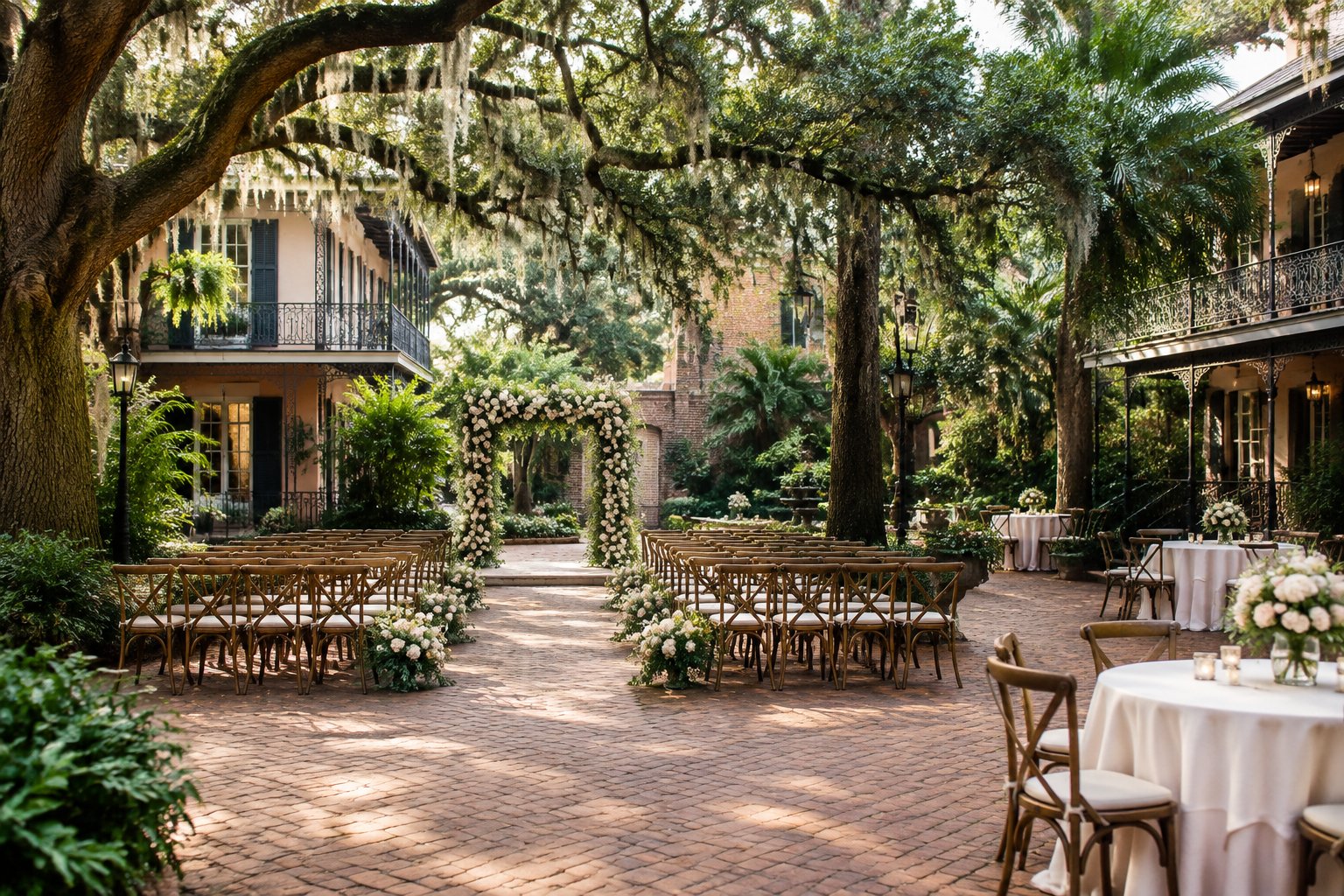
A garden or courtyard gives you an intimate, nature-rich backdrop with room to personalize the ceremony and reception. Live oaks, flowering plants, brick paths, and enclosed courtyards bring New Orleans character to your vows and wedding photos.
Check how the outdoor space works at each point in your event. A garden ceremony needs a clear aisle and comfortable seating, while a reception layout needs room for dining, dancing, and service staff.
Ask where guests will gather between the ceremony and dinner, and whether the space has lighting for an evening celebration. If you’re drawn to leafy grounds and natural details, explore what a garden venue for your wedding can offer.
Some gardens provide an established floral setting, which can help you shape your décor plan. At Paradigm Gardens, the venue describes a lush garden setting with flowers, farm-to-table dining, and flexible layouts for ceremonies and receptions. Ask how the space will be arranged for your guest count and chosen event style.
Are Rooftop and Riverfront Venues a Good Fit?
Rooftop and riverfront venues suit you if open-air views are a priority and your guests can reach the event easily. A terrace can create a dramatic ceremony backdrop, while a downtown location may put hotels and restaurants close by.
During a tour, check whether the ceremony area has shade, wind protection, and a safe path for guests. Ask how the venue handles bright afternoon sun and how long outdoor music can continue.
A view-focused terrace may feel exposed, so confirm where guests can move during a passing shower or strong winds. Compare these features as you browse beautiful outdoor wedding venues in different settings.
What Should You Know About Historic Properties?
Historic properties give you period details and a strong sense of place, though their layouts can shape how your event runs. Courtyards, galleries, balconies, and landscaped grounds each affect guest flow and the amount of usable space.
Ask about preservation rules before choosing décor or rentals. Some properties set limits on candles, open flames, hanging decorations, or furniture placement.
Check whether the venue has accessible routes between the ceremony, reception, and restrooms, and confirm how many guests each area can hold comfortably.
Which New Orleans Area Works Best for Guests?
Choose an area that fits your venue style and makes the wedding weekend easy for your guests to navigate. The French Quarter offers a walkable historic setting, the Garden District brings an oak-lined residential feel, and locations farther from downtown may give you more room to spread out.
How Do the French Quarter and Garden District Compare?
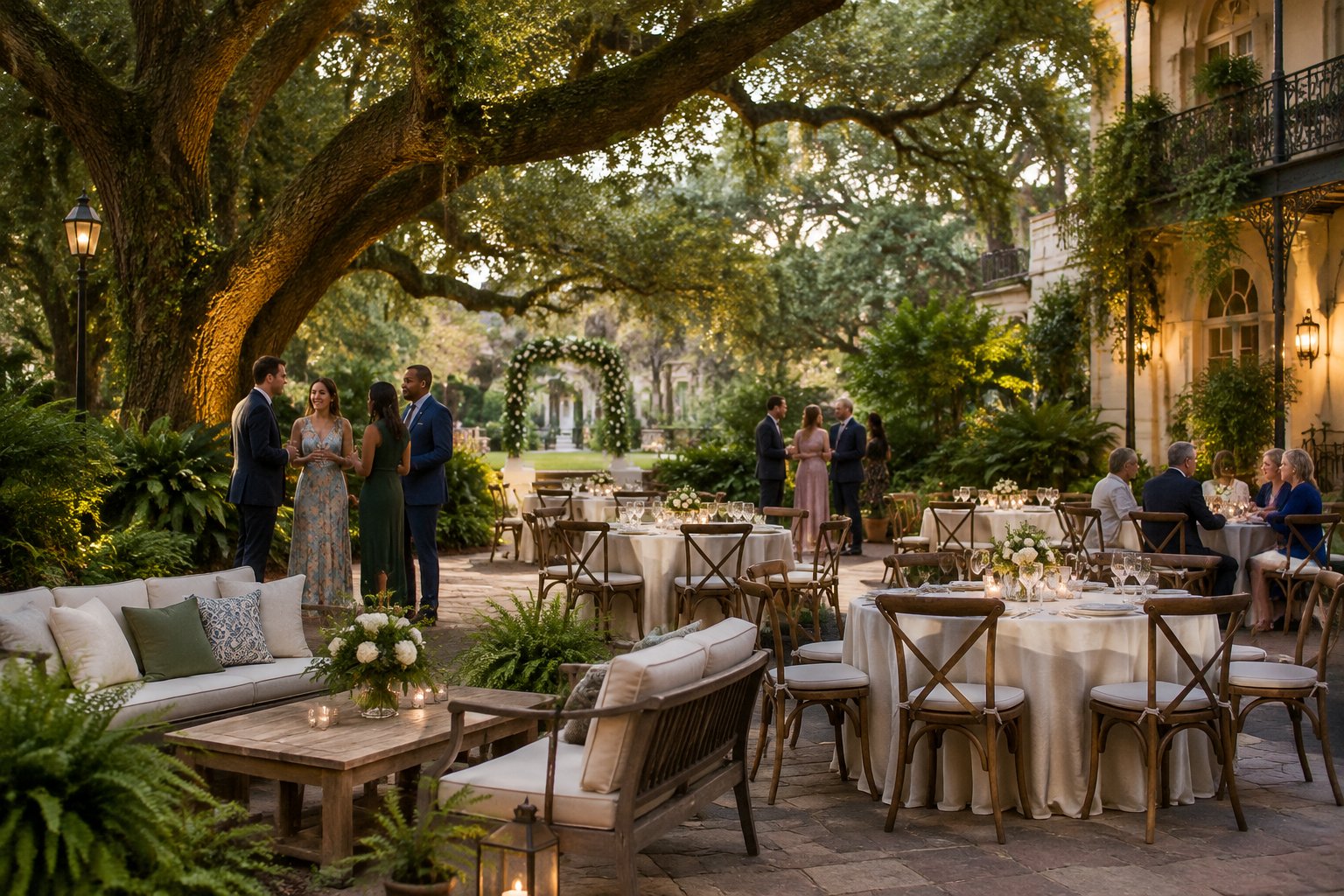
The French Quarter suits you if you want historic streets, courtyard options, and nearby hotels, restaurants, and nightlife. Guests staying in the neighborhood may be able to walk between their hotel and the celebration, which can simplify transport.
The Garden District offers a quieter backdrop with historic homes, wrought-iron details, and tree-lined streets. It feels more residential, so plan how guests will travel between hotels and the venue.
A shuttle can help if your event runs late or your guest list includes people who would rather avoid driving. For a smaller celebration, compare the location and guest capacity with options for intimate wedding venues in New Orleans.
What Should You Consider Outside the City Center?
A venue beyond the central neighborhoods can give you a more spacious setting and a different pace for your wedding day. City Park, for example, offers outdoor locations beneath live oaks as well as covered and indoor options at some venues.
Check driving times from the hotels where guests plan to stay, and ask about parking, shuttle access, and rideshare pickup areas. Public parks and other public spaces may require permits and follow specific rules for vendors, sound, and setup.
If you’re comparing local outdoor wedding venues, include travel time and any permit requirements in your notes.
What Should You Ask Before Booking?
Get clear answers about weather plans, package details, and venue rules before you sign a contract. Those details affect how you plan the event, what you need to rent, and how smoothly the day can run.
Is There an Indoor Backup Space?
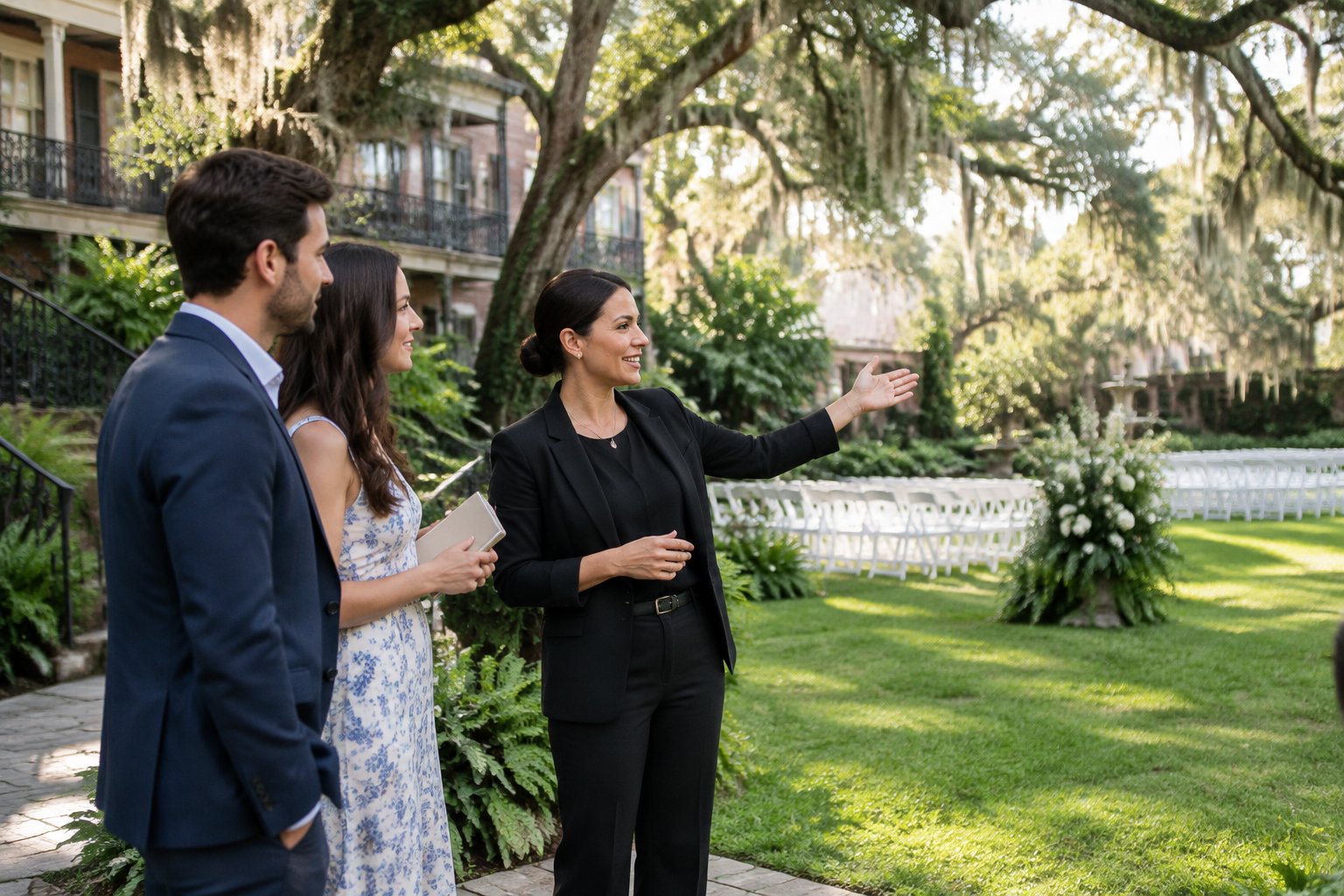
An outdoor venue should have a written weather plan that tells you where the event will move if rain, heat, or wind makes the original setup uncomfortable. Ask whether the backup is a dedicated indoor room, a covered area, or a tent, and confirm that it can hold your full guest count.
Find out when the venue makes the weather call and who makes it. Ask whether moving indoors changes the ceremony layout, vendor setup, or event schedule.
A venue with both indoor and outdoor spaces can give you more options; compare what’s included at indoor-outdoor wedding venues.
What Do Venue Packages Include?
A package can include the venue rental, chairs, tables, linens, catering, bar service, staff, and coordination. Each venue defines its package differently, so ask for an itemized list and note which services are optional.
Confirm the rental window, setup and cleanup times, and whether the venue provides a coordinator on the wedding day. If you’re considering an all-inclusive wedding venue in New Orleans, check whether the package includes ceremony setup as well as the reception.
Get any promised inclusions in writing before you compare proposals.
Are There Guest, Vendor, or Sound Restrictions?
Ask for the guest capacity for your specific layout, since ceremony seating, dining, and dancing use space differently. Confirm whether the venue requires you to choose from a preferred vendor list or allows you to bring your own caterer, florist, and entertainment team.
Review the rules for amplified music, event end times, décor, and deliveries. If your ceremony or reception uses a public space, ask whether you need permits and who handles the application.
A clear list of restrictions helps you build a realistic timeline and vendor plan.
How Much Does an Outdoor Wedding Venue Cost?
Your total venue cost depends on the rental fee, guest count, package inclusions, and the extra services your event needs. Compare written estimates for the same guest count and event hours so you can see which costs are included and which remain separate.
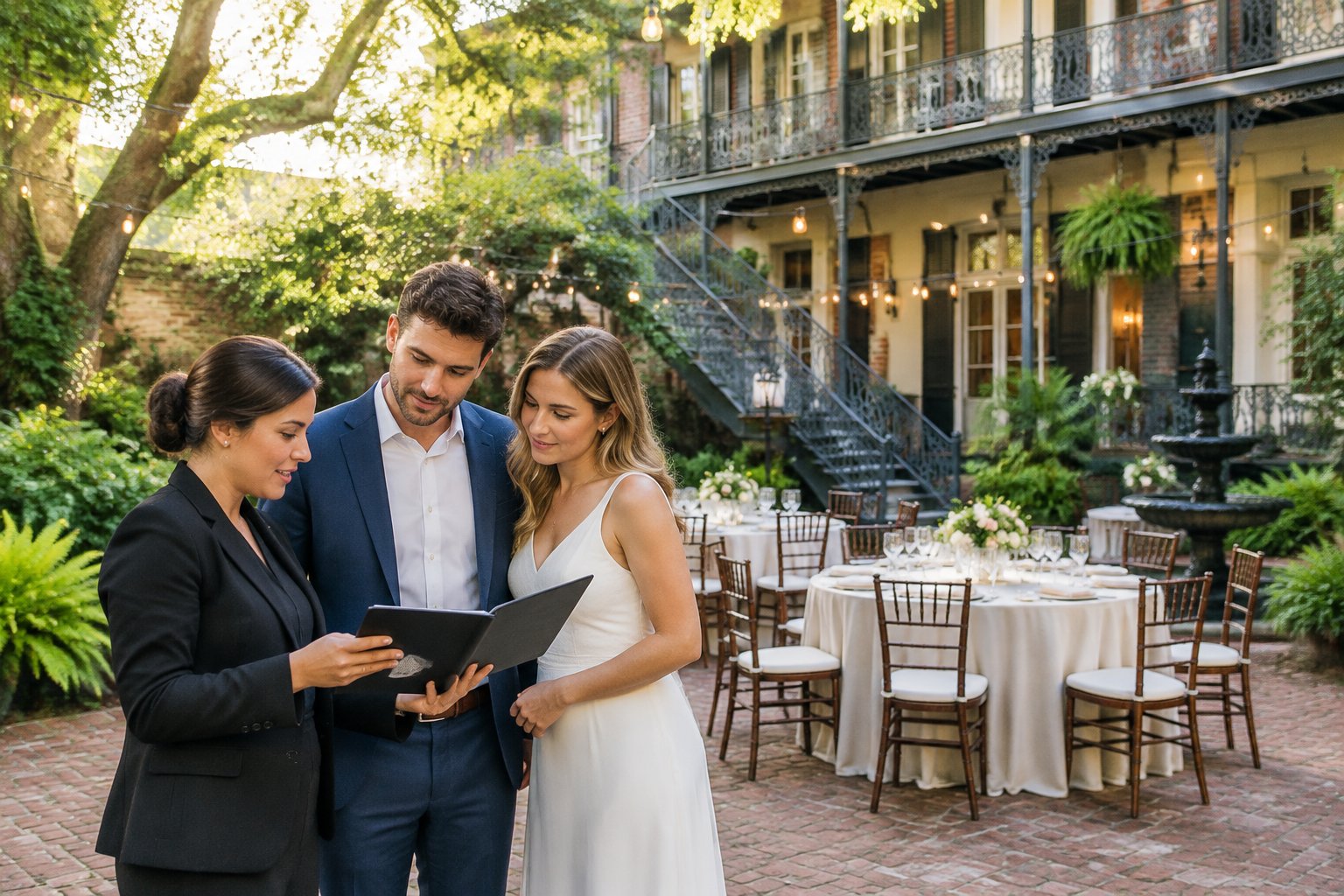
Which Fees Can Affect the Total?
The venue rental is only one part of your budget. Taxes, service charges, security, setup labor, rentals, catering, bar service, and cleanup can all change the final amount.
Outdoor spaces may also require extra costs for tenting, lighting, fans, heaters, or a backup room. Ask whether the venue charges by the hour, by the guest, or through a set package.
Check the deposit amount, payment schedule, cancellation terms, and any overtime fees. To put your quote in context, review common factors that affect what most wedding venues cost.
How Can You Compare Packages and Rental Costs?
Compare each proposal line by line and use the same guest count, event length, and service needs. A lower rental price may come with more separate costs, while a package may bundle items you would otherwise rent or arrange yourself.
Ask each venue for a full estimate that includes the ceremony and reception, then mark any services you still need to book. Check whether the package includes tables and chairs for both spaces, catering staff, bar service, and event coordination.
This gives you a clearer view of the total cost before you commit.
When Is the Best Time for an Outdoor Ceremony?
Spring and fall are popular choices for outdoor weddings in New Orleans because the weather is more comfortable than in the hottest summer months. Your ceremony time, shade, and rain plan still shape how guests experience the day.
How Can You Plan Around Heat and Rain?
Plan for shade, drinking water, and a place to cool off, especially if guests will be outside for more than the ceremony. In warm weather, schedule the vows for a cooler part of the day and ask whether the venue has fans or an air-conditioned space nearby.
Rain showers can arrive quickly, so confirm the backup plan before booking. Ask whether the venue supplies a tent or whether you arrange and pay for one, and find out how much notice vendors need to move equipment.
A written plan helps you make decisions without leaving guest comfort to chance.
Which Months and Times of Day Are More Comfortable?
March through May and October through November are popular windows for outdoor ceremonies, while summer brings higher heat and humidity. Fall dates can overlap with hurricane season, so keep travel plans flexible and ask your venue about its severe-weather policy.
For a warm-season wedding, an early morning or late-afternoon ceremony can limit the time guests spend in direct sun. In cooler months, check sunset times and plan your ceremony and portraits around available daylight. Use a guide to wedding start times as you build a schedule that fits the season, venue, and reception plans.