
Sample Wedding Weekend Itinerary for Guests: A 3-Day Plan
A sample wedding weekend itinerary for guests gives you a clear Friday-to-Sunday plan, with event times, locations, and travel details in one place. A well-paced wedding weekend schedule helps guests know when to join in and when they have time to rest.
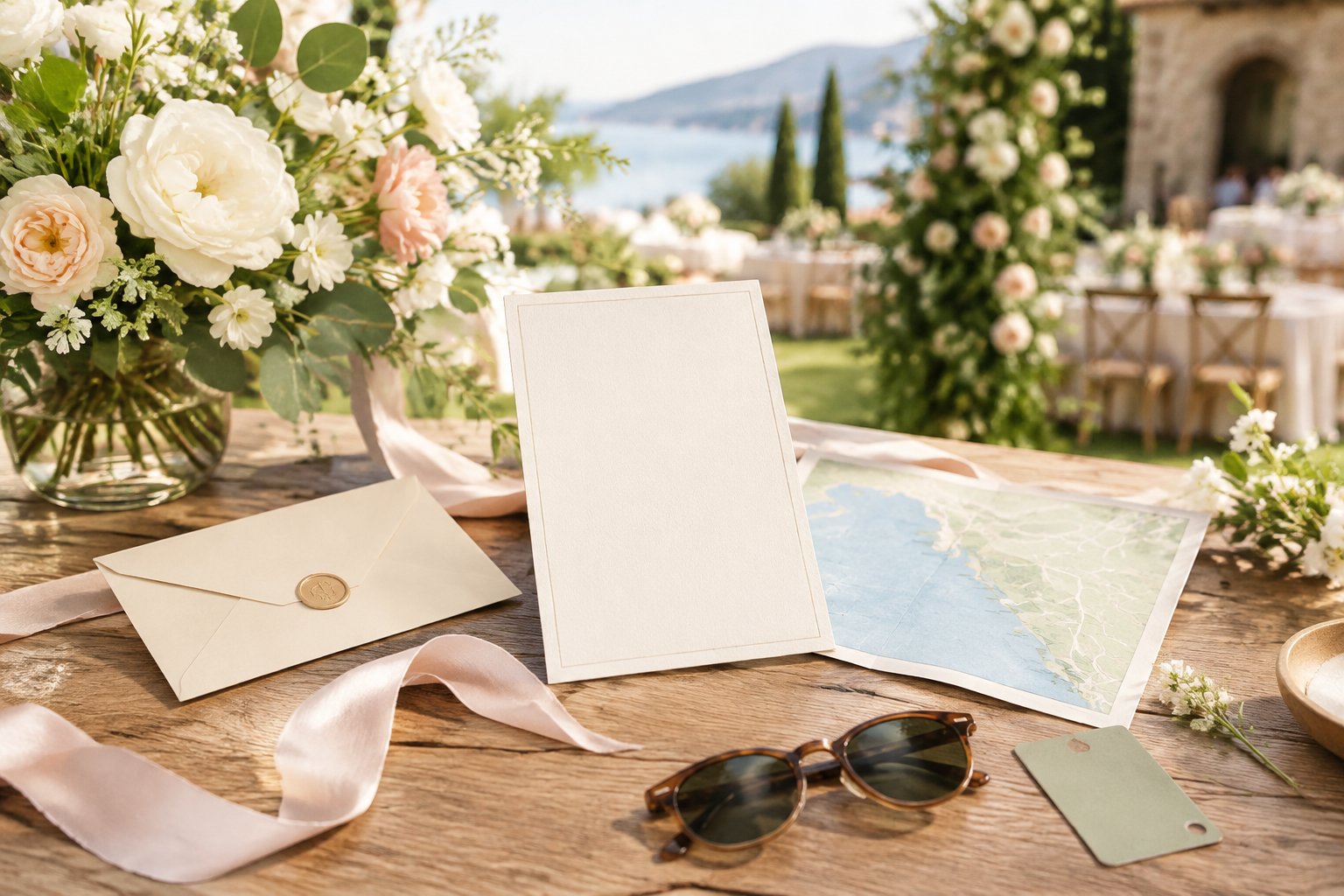
Use the sample below as your starting point, then add your confirmed details and share the schedule through your wedding website or a printed card. If you’re still shaping the event plan, creating a wedding weekend itinerary can help you organize the key details.
A Copy-Ready Friday-to-Sunday Example
A guest-friendly schedule groups events by day and gives each gathering a clear start time, location, and dress note. Adjust the example to match your plans, and mark which events are open to all guests.
Friday: Rehearsal, Dinner, and Welcome Drinks
The rehearsal dinner timeline below gives the wedding party time to practice before dinner, while the welcome party lets more guests join the celebration. If your rehearsal dinner is invitation-only, say so clearly in the schedule.
| Time | Event | Guest details |
|---|---|---|
| 4:30 p.m. | Ceremony rehearsal | Wedding party and immediate family; ceremony venue |
| 6:00 p.m. | Rehearsal dinner | Invited guests; dinner venue; smart casual |
| 7:30 p.m. | Welcome drinks | All guests; hotel lounge; casual |
| 9:30 p.m. | Evening wraps up | Check shuttle and hotel return details |
You can combine the rehearsal dinner and welcome drinks at one venue, or list them as separate events. A free wedding weekend itinerary template gives you a simple structure for adding the times, addresses, and notes guests need.
Saturday: Ceremony, Reception, and After-Party
Set the ceremony time, guest arrival time, and transportation details before you publish Saturday’s schedule. Your wedding reception timeline can then show guests how the evening flows.
| Time | Event | Guest details |
|---|---|---|
| 3:30 p.m. | Guest arrival | Ceremony venue; doors open |
| 4:00 p.m. | Wedding ceremony | Outdoor garden; cocktail attire |
| 4:30 p.m. | Cocktail hour | Terrace beside the ceremony site |
| 5:45 p.m. | Newlywed entrance and dinner | Reception begins; dinner service follows |
| 7:15 p.m. | First dance and parent dances | Dance floor opens after the dances |
| 8:00 p.m. | Cake cutting and dancing | Dessert and reception continue |
| 10:30 p.m. | Wedding exit | Shuttle pickup at the main entrance |
| 10:45 p.m. | Wedding after-party | Hotel bar; optional |
Shift these times to fit your venue, meal service, and local event rules. A reception could include speeches before dinner, a cake cutting later in the evening, or an after-party at another location, so list the sequence guests need to follow.
Sunday: Farewell Brunch and Departures
A relaxed wedding brunch gives guests a chance to say goodbye before heading home. Include the brunch end time and hotel checkout details so guests can plan their departures.
| Time | Event | Guest details |
|---|---|---|
| 9:30 a.m. | Farewell brunch | Hotel restaurant; casual attire |
| 11:30 a.m. | Brunch ends | Drop in when you’re available |
| 12:00 p.m. | Hotel checkout | Confirm checkout time with your hotel |
If the brunch is optional, label it that way. A clear itinerary for your wedding weekend helps guests see which gatherings are part of the hosted plan.
How to Adapt the Plan to Your Celebration

Shape your wedding itinerary around the celebration’s length, traditions, and travel needs. A two-day gathering can focus on the ceremony and reception, while a destination wedding weekend may call for extra arrival time and open periods for guests to explore.
Choose a Two-Day, Three-Day, or Destination Schedule
For a two-day plan, you can schedule a welcome gathering on Friday and the ceremony and reception on Saturday. Add a Sunday brunch if your guests are staying nearby and your budget allows.
A three-day schedule gives you room for a Friday rehearsal dinner or welcome party, Saturday’s wedding events, and a Sunday sendoff. For a destination wedding timeline, account for flight arrivals, hotel check-in, and the distance between accommodations and event spaces. A destination wedding weekend itinerary can help you account for guest travel and on-site events.
Add Optional Activities and Cultural Traditions
Include activities that suit your guests and the place you’re celebrating. A morning golf outing or a casual local tour can be listed as optional, with booking details for guests who want to join.
If your celebration includes traditions such as a sangeet or baraat, give each event enough time and explain any attire or participation details guests need. Make the order of events easy to follow, especially when gatherings happen at different venues. For travel-focused celebrations, a destination wedding itinerary for guests can help you plan guest-facing information.
Build in Travel Time and Rest
Leave space between scheduled events for travel, meals, changing clothes, and downtime. Check the real travel time between locations, then add a buffer for parking, traffic, and guests who need extra time to move around.
Keep optional activities separate from required events so guests can choose their own pace. A wedding weekend itinerary template is easier to use when you show both the planned gathering times and the open periods around them.
What Details Should Guests See?
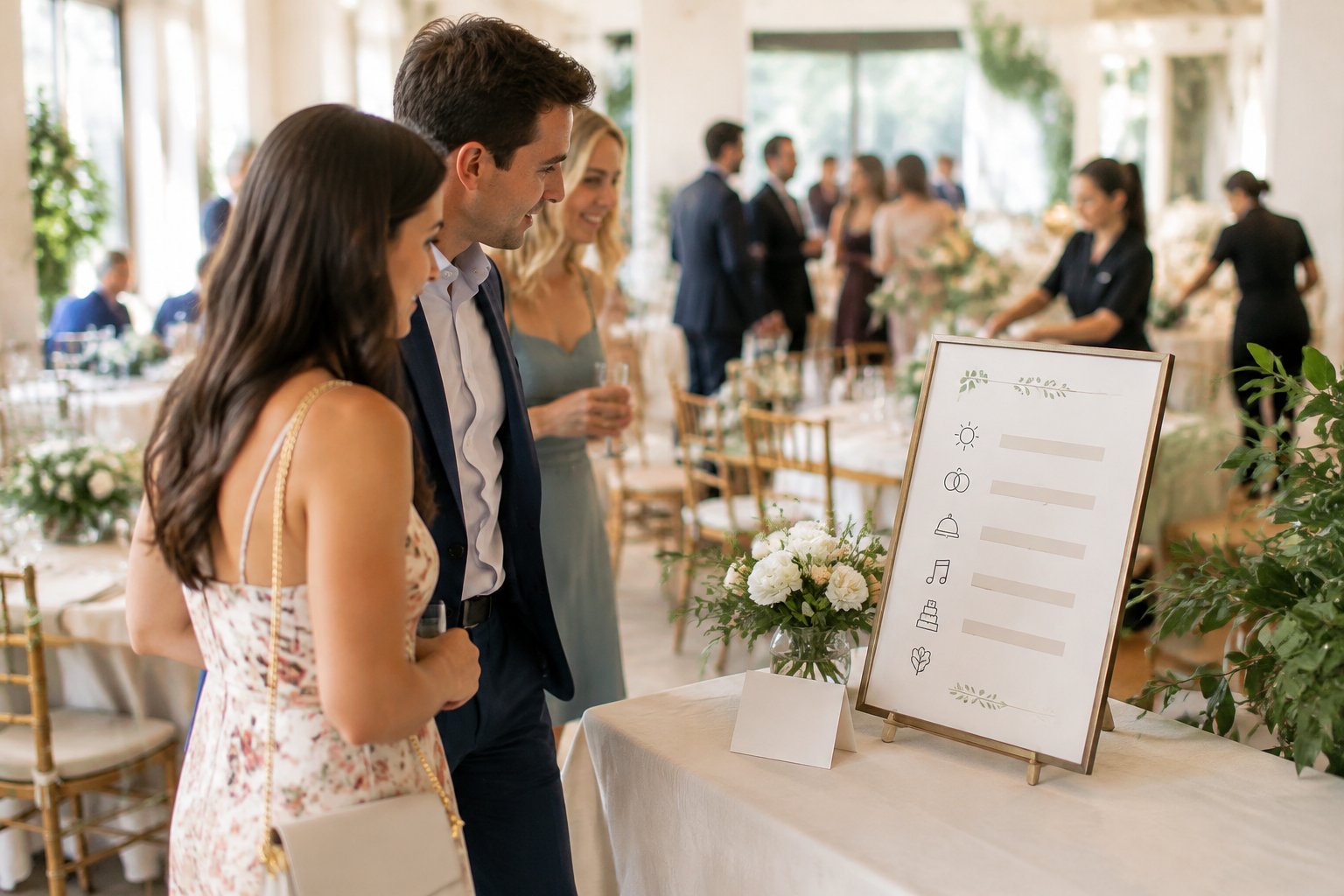
Give guests the information they need to arrive prepared: event times, addresses, attire, transportation, and invitation details. Keep the schedule brief, then use your wedding website for fuller directions and updates.
List Times, Locations, Attire, and Transportation
For each event, include the start time, venue name, street address, and dress code. Add practical notes such as outdoor terrain, limited parking, or a shuttle departure point.
If you provide transportation, list where guests should meet, when the shuttle leaves, and when return service ends. Include a contact for urgent day-of questions, such as your planner or a designated attendant. A guide on how to make a wedding itinerary can help you organize these guest details.
Label Invitation-Only and Optional Events
Make it clear who is invited to each event. Use labels such as “wedding party and immediate family,” “all guests,” or “optional activity” to prevent confusion about the rehearsal dinner, welcome party, and brunch.
If guests need to RSVP or pay for an optional outing, include the response deadline and booking instructions. A wedding welcome bag can also hold a printed itinerary, shuttle information, and a local map.
Share Updates on Your Wedding Website
Post the latest wedding schedule on your wedding website so guests can check it before and during the weekend. Include a short link or QR code on printed materials, and update the page if a venue, time, or shuttle plan changes.
Keep the website easy to scan on a phone. These wedding website details help guests find event information without searching through long messages.
How to Coordinate the Wedding-Day Timeline

Build the wedding day timeline backward from the ceremony, then add preparation, photos, and transitions. Keep the detailed schedule for your wedding party and vendors separate from the guest-facing itinerary.
Plan Getting Ready, Photos, and the First Look
Start by setting the ceremony time, then work backward to choose the getting-ready start time. Account for hair and makeup appointments, getting dressed, and travel to the venue.
If you’re planning a first look, family photos, or wedding party photos before the ceremony, agree on the photo order with your photographer. A day-of wedding itinerary can help you arrange those blocks around your ceremony and reception plans.
Allow Time for the Ceremony and Reception Transitions
Give guests time to arrive and find their seats before the ceremony starts. Afterward, leave enough time for family photos and the move to cocktail hour or the reception space.
Your wedding timeline should account for the length of the ceremony, meal service, speeches, and the newlywed entrance. Add a buffer between major events so a short delay does not push every later activity back.
Keep Vendor Logistics in a Separate Schedule
Create a vendor timeline with load-in times, setup deadlines, sound checks, and contact information. Share it with your planner, venue team, photographer, caterer, and other vendors who need the details.
Guests need a simple schedule; vendors need the working plan. A wedding reception itinerary can help you map the guest-facing flow through dinner and dancing.
How to Balance Guest Experience, Planning, and Budget
Pick Events That Fit Your Guests and Budget
Prioritize the gatherings that feel important to you, such as a welcome dinner or farewell brunch. Optional activities can add variety without requiring every guest to attend or increasing the hosted event costs.
Consider who is traveling, how long they’ll be in town, and whether guests will be paying for meals or activities themselves. If you’re setting event costs, planning a wedding on a budget can help you think through where to focus your spending.
Make Downtime and Transportation Part of the Plan
Give guests time to check in, rest, eat, and get ready between events. Plan transportation around the distance between hotels and venues, and share pickup and return times in advance.
If older guests or guests with mobility needs will attend, check the walking routes and identify accessible drop-off points. Guests should be able to tell when transportation is provided and when they need to arrange their own ride.
Confirm the Schedule With Your Wedding Planner
Review the event order, locations, and transition times with your wedding planner before sharing the final itinerary. Confirm that venue access, vendor arrivals, shuttle runs, and event end times fit together.
Send the guest version once the details are set, then update it promptly if a change affects guests. Keep the latest schedule in one easy-to-find place, such as your wedding website.